You transfer a load of freshly washed laundry to the dryer and notice it doesn’t smell fresh at all — or worse, it smells musty and damp even though it just came out of the machine. Or you open your washing machine lid between uses and are hit with a sour, mildewy smell. If either of these sounds familiar, your washing machine itself has developed an odour problem — and it’s not going to fix itself.
This is one of the most common complaints Tri-City Repairs hears from homeowners in Coquitlam, Port Coquitlam, and Port Moody. The good news is that washing machine odour problems are almost always solvable without a service call. Here’s exactly what causes them and how to get your machine — and your laundry — smelling clean again.
Why Does a Washing Machine Develop Odours?
The irony of a washing machine that smells bad is easy to miss — isn’t it cleaning things? The problem is the environment inside the machine itself. Warm, moist, enclosed spaces are ideal breeding grounds for mould, mildew, and bacteria. Between cycles, residual water, detergent residue, fabric softener buildup, and trapped lint create a perfect habitat for microbial growth.
The shift toward high-efficiency (HE) washing machines has made this problem more common, because HE machines use much less water per cycle — which means there’s less water to flush residues away from drum surfaces, door seals, and the detergent dispenser.
The Main Sources of Washing Machine Odour
1. The Door Gasket (Front-Load Machines)
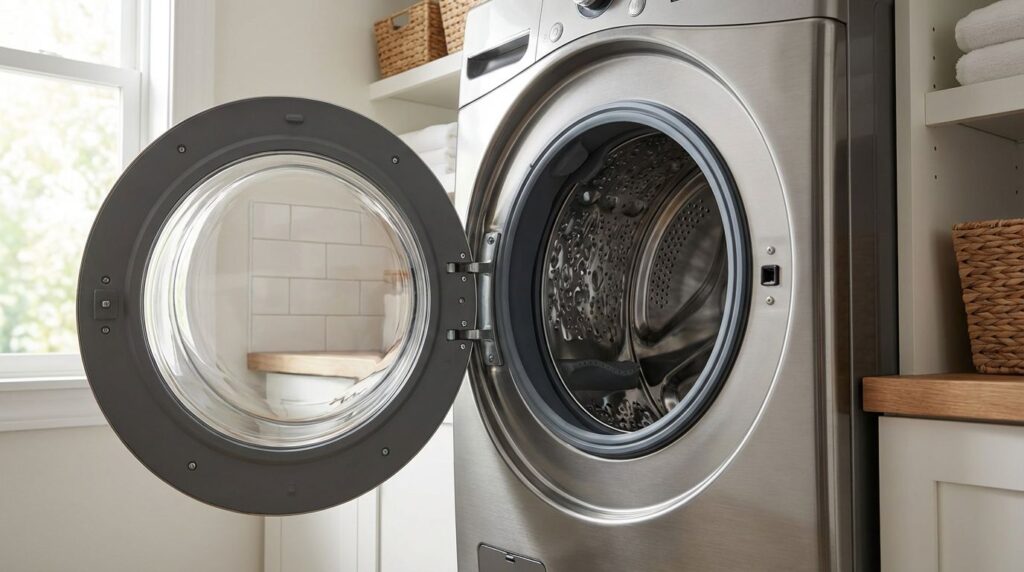
The rubber door seal on a front-load washing machine is the single most common source of washing machine odour. The seal has multiple folds and crevices that trap moisture, lint, hair, and detergent residue. When the door is left closed between uses, that damp environment never dries out — and mould grows in the folds of the seal.
Pull back the door gasket and look in the folds. If you see black or dark grey spotting, that’s mould. You may also find lint, small items from pockets, and even water sitting trapped inside the seal.
How to clean it: Wearing gloves, pull back the gasket folds and wipe the entire surface with a cloth soaked in a solution of equal parts white vinegar and water, or a diluted bleach solution (1 tablespoon bleach per litre of water). Work your way around the entire seal, reaching into the folds. Then wipe it dry and leave the door ajar to ventilate.
2. The Detergent Dispenser
Liquid detergent and fabric softener residue builds up quickly in the dispenser drawer. Over time, the buildup becomes a thick, gummy layer that ferments and produces foul odours. On many front-load machines, the entire dispenser drawer can be removed for cleaning.
How to clean it: Remove the drawer completely (there’s usually a release button or tab). Rinse it under hot water and use a small brush (an old toothbrush works well) to scrub all surfaces. Inspect the dispenser cavity in the machine itself — clean any buildup there too. Let the drawer dry completely before reinstalling.
3. The Drum Interior
The inside of the drum can develop a biofilm of bacteria and mould over time, especially in machines that don’t drain completely or that sit with damp loads for extended periods. This is more common in top-load machines, where water can sit in the drum grooves or around the agitator base.
How to clean it: Run a hot wash cycle with no laundry and add two cups of white vinegar directly to the drum (or the detergent dispenser). For stubborn odours, follow with a second cycle using half a cup of baking soda in the drum. Many machines now include a dedicated Drum Clean or Tub Clean cycle — use it monthly if available.
4. The Drain Filter (Front-Load Machines)
Most front-load washing machines have a pump filter (also called a coin trap) located at the lower front of the machine behind a small access panel. This filter catches lint, coins, keys, and other debris before they reach the drain pump. It also catches water — and if the filter is never cleaned, it becomes a festering pool of stagnant water and trapped debris that generates powerful odours.
How to clean it: Place a shallow tray and towels beneath the access panel before opening — water will spill out. Slowly unscrew the filter cap, allowing water to drain into your tray. Remove the filter, rinse it thoroughly, clean the housing, and reinstall. Cleaning this filter every 1–3 months prevents both odours and drainage problems.
5. Detergent and Fabric Softener Overuse
Using too much detergent — or the wrong type of detergent in an HE machine — is one of the leading causes of washing machine odour. Excess detergent doesn’t rinse away completely during the cycle; it coats the drum, the door seal, and internal components with a soapy residue that then attracts bacteria and mildew.
The fix: Use only the amount of detergent specified for your machine — typically less than you think. For HE machines, always use HE-rated detergent (marked with the HE symbol). Liquid fabric softener should also be used sparingly; consider switching to dryer sheets or wool dryer balls instead. Skip the fabric softener altogether in HE washers if odour is a recurring problem.
Hard water can compound this problem, as minerals in the water react with detergent to form residue that’s harder to rinse away. The Effects of Mineral Buildup on Your Appliance Performance explores how mineral deposits affect washers and other home appliances.
Step-by-Step: Deep Cleaning Your Washing Machine
For front-load washers:
- Remove and clean the detergent dispenser drawer thoroughly.
- Clean the door gasket folds with a vinegar/water solution.
- Clean the pump filter — drain water, remove debris.
- Run a Drum Clean cycle (or a hot empty cycle with 2 cups white vinegar).
- Follow with a rinse cycle using half a cup of baking soda in the drum.
- Wipe the drum interior dry after the cycle.
- Leave the door and detergent drawer open to air dry.
For top-load washers:
- Fill the drum with hot water on the largest load setting.
- Add 4 cups of white vinegar and let it agitate for a minute, then pause and soak for 1 hour.
- Complete the cycle, then refill and add 1 cup of baking soda. Run another full cycle.
- Wipe down the lid gasket, around the agitator, and under the drum rim.
- Clean the dispenser compartments.
- Leave the lid open between uses.
Preventing Washing Machine Odours
Once you’ve got the machine smelling clean, keeping it that way is mostly about good habits:
- Always leave the door or lid ajar after a cycle. This is the single most effective preventive measure. A ventilated drum dries out between uses and mould can’t grow.
- Remove laundry promptly after the cycle ends. Damp laundry sitting in the drum for hours generates mildew both in the clothes and in the machine.
- Use the right amount of HE detergent. More soap doesn’t mean cleaner clothes — it means more residue.
- Run a hot cycle or drum clean cycle monthly.
- Wipe the door seal dry after each use — especially in front-load machines.
If you’re also noticing issues with how the machine is performing — not just how it smells — there may be underlying problems at play. Why Your Washing Machine Fills Slowly and How to Fix It covers water inlet problems that can affect rinse quality, and How to Troubleshoot a Washer That Skips the Rinse Cycle is relevant if your machine isn’t completing its rinse — which leaves detergent residue in the drum that contributes to odour.
When the Smell Signals a Mechanical Problem
In most cases, a bad-smelling washing machine is a hygiene and maintenance issue — not a mechanical one. However, there are exceptions:
- A strong burning rubber or electrical smell during operation signals a motor or belt problem — stop the machine and call a technician.
- A sewer gas smell (like rotten eggs) coming from the machine’s drain area may indicate a dry P-trap or a blocked vent in your home’s plumbing — this is a plumbing issue, not an appliance issue.
- A persistent smell even after thorough cleaning may indicate a drain pump issue where water isn’t fully evacuating from the machine.
When to Call Tri-City Repairs
If you’ve deep cleaned the machine thoroughly and the odour returns quickly, or if the smell is accompanied by performance issues like poor draining, spin cycle problems, or error codes — it’s worth having a technician take a look. There may be a component issue causing water to sit in the machine between cycles.
Tri-City Repairs services washing machines throughout Coquitlam, Port Coquitlam, and Port Moody. Call us at (604) 359-5952 or book at tricityrepairs.ca.