Your dryer has been faithfully tumbling laundry for years, but lately something feels off — clothes take longer to dry, the drum sounds different, or maybe it stopped spinning altogether. A worn dryer belt is one of the most common culprits behind a dryer that isn’t working properly. The good news? It’s usually a fixable problem. The bad news? Ignoring it can put extra strain on your motor and turn a simple repair into a much bigger one.
In this guide, we’ll walk you through the telltale signs your dryer belt is worn out, why it matters, and what your next steps should be. If you’re in Coquitlam, Port Coquitlam, or Port Moody, Tricity Repairs is here to help when a DIY fix isn’t in the cards.
What Is a Dryer Belt and What Does It Do?
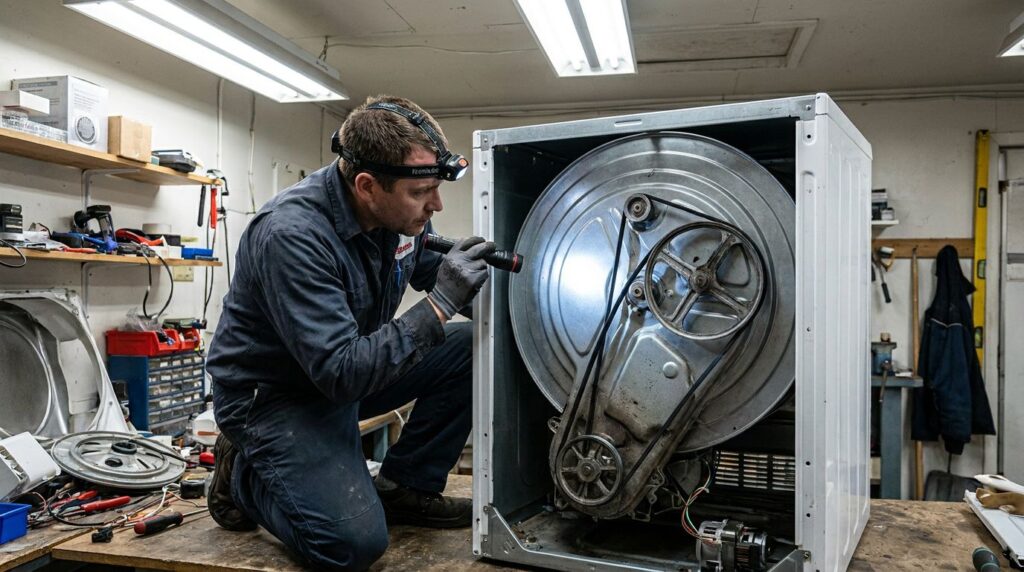
The dryer belt (also called the drive belt) is a long, thin rubber loop that wraps around the drum, the motor pulley, and an idler pulley. When the motor runs, it spins the belt, which in turn rotates the drum. Without this belt, your dryer can run — the motor can hum, the heating element can heat — but the drum won’t turn. No drum rotation means no tumbling, and wet clothes stay wet.
Most dryer belts are made from reinforced rubber and are designed to last several years of normal use. But like any rubber component, they wear down over time, especially with heavy loads, overloading, or infrequent cleaning that forces the motor to work harder.
Warning Signs Your Dryer Belt Is Wearing Out
1. The Drum Won’t Spin (But the Motor Runs)
This is the clearest sign. If you start your dryer and hear the motor humming but the drum stays still, the belt has likely snapped or slipped off. Open the dryer door — if the drum doesn’t rotate when you press the start button, the belt is the first thing to check.
2. A Thumping or Squealing Noise During Operation
A worn or cracked belt doesn’t always break immediately. As it degrades, it can cause a rhythmic thumping sound that matches the rotation of the drum. This is often the belt slipping or a section becoming thinner than the rest. A high-pitched squealing can also indicate the belt is glazed (hardened and shiny) and no longer gripping the pulleys properly.
3. The Drum Spins Unevenly or Wobbles
A belt that’s stretched or has lost elasticity can allow the drum to spin unevenly. You might notice the drum feels loose when you push it by hand, or that clothes clump on one side during a cycle. This uneven movement puts additional stress on the drum bearings and idler pulley.
4. Longer Drying Times
If your dryer is taking significantly longer to dry a normal load, and you’ve already cleaned the lint trap and checked the vent, a slipping belt could be the reason. When the belt is worn, it can slip during heavy loads, reducing the drum’s rotation speed and decreasing airflow and tumbling efficiency.
For more context on drying performance issues, check out our guide: Why Your Dryer Takes Too Long to Dry.
5. A Burning Rubber Smell
A worn belt generating friction against the drum or pulleys can produce a faint burning rubber smell. This is different from a burning dust smell you might get from a dirty heating element — it’s more acrid and plasticky. If you notice this odour, stop the dryer immediately and inspect the belt.
How to Inspect the Belt Yourself
If you’re comfortable doing a quick inspection, you can often confirm a belt issue without professional tools. Start by unplugging the dryer. Then:
- Open the dryer door and try spinning the drum by hand. It should rotate smoothly with light resistance. If it spins completely freely with no resistance, the belt is likely broken.
- On many dryers, you can remove the top panel or front panel to visually inspect the belt. Look for cracks, fraying, glazing, or a belt that’s lying flat inside the cabinet rather than wrapped around the drum.
- Check the idler pulley and motor pulley for wear — a failed pulley can also cause belt slippage or noise.
If you find a snapped belt, it will usually be lying in a heap at the bottom of the dryer cabinet. Replacement belts are model-specific and generally inexpensive, but the labour of disassembling and reassembling the dryer takes patience and the right tools.
Can You Run a Dryer with a Worn Belt?
Not safely. A severely worn or partially snapped belt can cause the drum to stop mid-cycle, creating a fire hazard if clothes sit against a hot heating element without moving. A slipping belt also forces the motor to work harder, potentially burning it out — turning a low-cost belt repair into a much more expensive motor replacement.
If you suspect belt issues, it’s always better to stop using the dryer and get it checked promptly. Curious about what else can cause dryer problems? Read our post on Dryer Not Heating: Parts to Check.
How Long Does a Dryer Belt Last?
Under normal household use, a dryer belt typically lasts anywhere from 8 to 12 years. However, several factors can shorten its lifespan:
- Consistently overloading the dryer — Heavy loads force the belt and motor to work harder.
- Running very long cycles — Extended heat exposure degrades rubber faster.
- Infrequent vent cleaning — A clogged vent makes the dryer run hotter and longer, stressing all components.
- Low-quality replacement belts — Off-brand belts may not match OEM specifications and can wear faster.
To extend belt life, keep loads reasonable, clean your lint trap every cycle, and have your dryer vent professionally cleaned once a year. For tips on protecting your dryer long-term, see our guide: How to Maintain Your Dryer and Prevent Fire Hazards.
Replacing the Dryer Belt: DIY vs. Professional Repair
Replacing a dryer belt is a moderately involved repair. Here’s what to consider:
DIY Route
If you’re mechanically inclined and have a couple of hours, replacing a dryer belt is doable. You’ll need the correct replacement belt for your model, screwdrivers, a putty knife or panel pry tool, and patience for routing the belt around the drum, motor pulley, and idler pulley correctly.
The trickiest part is often reattaching the idler spring so the belt maintains proper tension. Many brands have model-specific quirks — Whirlpool and Maytag are generally straightforward, while Samsung and LG front-loaders require full front panel removal and can be more complex.
Professional Repair
If you’re not confident with appliance disassembly, or if you find additional issues (worn idler pulley, drum bearing damage, motor problems), professional repair is the smart choice. A technician can inspect all related components at once, preventing repeat breakdowns.
Tricity Repairs serves Coquitlam, Port Coquitlam, and Port Moody with fast, honest dryer repairs. Call us at (604) 359-5952 and we’ll get your dryer back in action quickly.
What If the Belt Isn’t the Problem?
If you’ve inspected the belt and it looks fine, but your dryer still isn’t performing properly, there are a few other components to investigate:
- Idler pulley: This spring-loaded pulley keeps tension on the belt. A seized or worn idler pulley can mimic belt symptoms.
- Drum bearings or glides: If the drum is grinding or squeaking, worn drum support glides or rear bearing may be the cause.
- Drive motor: A humming motor that won’t start often points to a failed start winding or motor bearing.
- Thermal fuse: If the dryer runs but produces no heat, a blown thermal fuse might be the issue.
When to Repair vs. Replace
A belt replacement is almost always worth doing on a dryer that’s otherwise in good shape. The belt itself is cheap, and the repair cost is usually low. However, if your dryer is more than 12–15 years old and showing multiple symptoms — worn belt, noisy bearings, poor heating — it may be approaching the end of its useful life.
As a general rule: if the repair cost exceeds 50% of the cost of a comparable new dryer, replacing often makes more financial sense. For help weighing your options, read our Repair vs. Replace Guide.
Summary: Don’t Ignore a Worn Dryer Belt
A dryer belt is a small, inexpensive part that plays a critical role in your appliance’s function. Catching wear early — through sounds, smells, and performance changes — can save you from a more expensive motor replacement or a fire hazard. Regular maintenance and reasonable load sizes will extend the life of your belt significantly.
If you’re in Coquitlam, Port Coquitlam, or Port Moody and your dryer is making unusual noises, spinning unevenly, or not tumbling at all, Tricity Repairs can diagnose and fix the problem quickly. Call us at (604) 359-5952 — we’re your local appliance repair experts in the Tri-Cities.