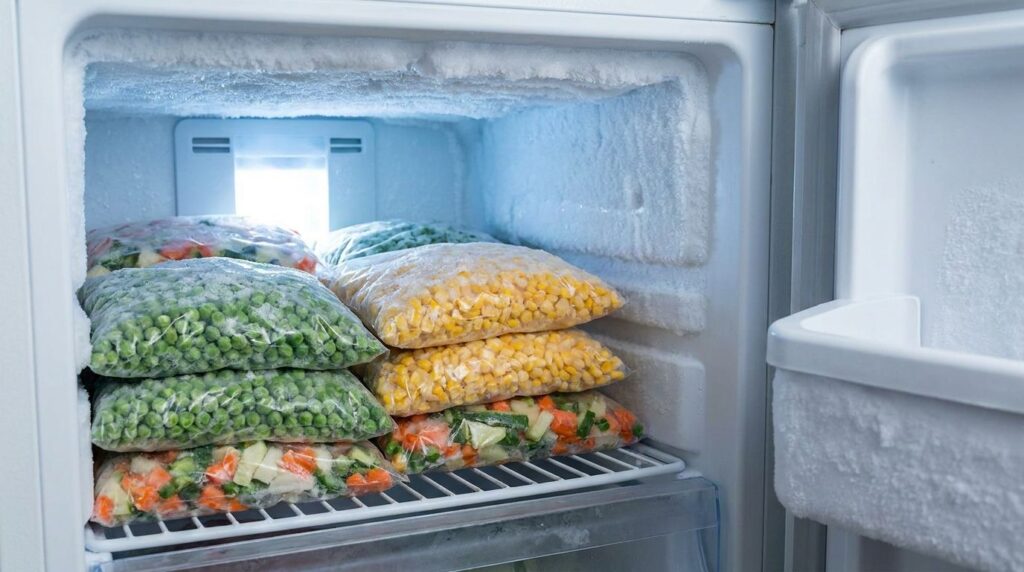
Opening your fridge to find frozen lettuce, icy milk, or solid leftovers is frustrating — especially since your refrigerator is supposed to keep things cool, not frozen. A refrigerator that’s freezing food in the fresh food compartment is a common problem with several identifiable causes. Most of them are fixable, and understanding what’s happening is the first step.
In this guide, we’ll cover the top reasons your refrigerator is freezing your groceries, how to troubleshoot each one, and when it’s time to call a repair technician. If you’re in Coquitlam, Port Coquitlam, or Port Moody, Tricity Repairs can diagnose and fix refrigerator issues quickly.
1. Temperature Is Set Too Low
This is the simplest and most common cause. The fresh food compartment of your refrigerator should be set between 35°F and 38°F (1.7°C to 3.3°C). If someone accidentally bumped the dial or adjusted the setting, your fridge may be running colder than intended.
Check your temperature setting first before assuming the appliance is malfunctioning. Use a refrigerator thermometer (not the built-in display, which isn’t always accurate) to measure the actual temperature on a middle shelf after letting the fridge run undisturbed for several hours.
2. Damper Control Is Stuck Open
Most refrigerators use a damper (also called an air diffuser or baffle) to control how much cold air flows from the freezer section into the fresh food compartment. When this damper gets stuck in the open position, too much freezing-cold air floods the refrigerator section continuously, dropping temperatures well below the safe zone for fresh food.
Signs of a stuck damper include the fresh food section being very cold even when set to the warmest setting, items closest to the back wall or near the top of the fridge freezing first, and the freezer section working normally. The damper can become stuck due to ice buildup, a failed motor, or a broken thermostat that controls it.
3. Faulty Temperature Control Thermostat
The thermostat monitors the refrigerator’s internal temperature and signals the compressor and fans to cycle on and off to maintain the set temperature. When the thermostat malfunctions, it can misread the temperature and tell the compressor to keep running even when the fridge is already cold enough — resulting in over-cooling and frozen food.
A failing thermostat may cause the refrigerator to run almost constantly, feel colder than the dial setting, or alternate between freezing food and then being too warm. Testing a thermostat requires a multimeter and some disassembly, but replacement is typically straightforward and reasonably priced.
4. Malfunctioning Thermistor (Temperature Sensor)
Newer refrigerators use a thermistor rather than a traditional thermostat — it’s an electronic sensor that monitors temperature and sends readings to the main control board. A faulty thermistor can report incorrect temperatures to the control board, causing the system to over-cool the refrigerator compartment.
Signs of a bad thermistor overlap with thermostat failure: inconsistent temperatures, food freezing at middle-dial settings, and the compressor running more than normal. Thermistors can be tested with a multimeter by checking their resistance at a known temperature.
5. Blocked Air Vents Inside the Fridge
Your refrigerator has specific vents designed to distribute cold air evenly throughout the compartment. If large items, containers, or bags of produce are pressed directly against these vents (typically at the back wall), cold air gets forced into concentrated spots rather than circulating properly — creating freezing pockets in some areas while other areas stay warmer.
This is a simple fix: rearrange items so nothing is directly blocking the air vents. Leave a couple of centimetres of clearance between food and the back wall. This also improves overall energy efficiency and extends the life of your compressor.
6. Leaving the Fridge Too Empty
An almost-empty refrigerator can actually freeze food more easily than a well-stocked one. With little thermal mass (food and drinks absorb and hold temperature), cold air circulates freely and the temperature can plunge quickly when the compressor runs. Items near the vents or the back wall are especially vulnerable. If your fridge is sparse, consider filling it with bottles of water to add thermal mass.
7. A Faulty Main Control Board
In modern refrigerators with electronic controls, the main control board orchestrates the compressor, fans, defrost system, and temperature sensors. A failing control board can send incorrect signals that cause the refrigerator to run colder than commanded. This is less common than the other causes, but it does happen — particularly in refrigerators that have had power surges or water damage.
Troubleshooting Step by Step
- Check and adjust the temperature setting — aim for 37°F (3°C) in the fridge, 0°F (-18°C) in the freezer.
- Place a thermometer inside — verify the actual temperature vs. the setting after 8 hours.
- Rearrange food away from vents — especially items on the top shelf and near the back wall.
- Listen to the compressor — if it’s running almost constantly, the temperature control system may be the culprit.
- Check the door seals — a leaking door seal lets warm air in, which can cause the fridge to over-compensate and run colder.
- Inspect the damper — if accessible, see if the damper door opens and closes freely.
If adjusting the settings and clearing the vents doesn’t help, the issue likely involves a component — damper motor, thermostat, thermistor, or control board — that needs professional diagnosis.
Which Foods Are Most at Risk?
Not all foods freeze at the same temperature. Water-based foods like lettuce, cucumbers, tomatoes, and fresh herbs freeze and become mushy at just below 32°F (0°C). Dairy products, eggs, and cooked leftovers are less sensitive but will still be damaged by sustained temperatures below 34°F (1°C).
If your leafy greens are getting icy while your juice seems fine, the problem may be localized — a blocked vent or a specific shelf position — rather than a system-wide temperature issue.
For related refrigerator troubleshooting, read: Refrigerator Running But Not Cooling? Here’s Why.
Can This Damage the Refrigerator?
A refrigerator that constantly over-cools is working harder than necessary. Extended compressor run times increase wear on the compressor, shorten the lifespan of your refrigerant system, and can strain electrical components. If the issue is caused by a stuck damper allowing ice to build up, that ice can eventually block fans and airflow pathways, compounding the problem.
Addressing a freezing-food issue promptly protects both your groceries and your appliance. For more on avoiding costly refrigerator problems, see: Common Refrigerator Mistakes That Lead to Costly Repairs.
When to Call for Professional Repair
If your refrigerator is freezing food and basic adjustments haven’t helped, it’s time to get a technician involved. Component-level diagnosis — testing the thermistor, damper motor, thermostat, and control board — requires tools and experience that go beyond typical DIY troubleshooting.
Tricity Repairs serves Coquitlam, Port Coquitlam, and Port Moody with same-week refrigerator repair appointments. We carry common parts for major brands including Samsung, LG, Whirlpool, Frigidaire, and GE. Call us at (604) 359-5952 and we’ll diagnose what’s turning your fridge into a freezer.
Summary
A refrigerator that freezes food is usually caused by a temperature setting that’s too low, a stuck damper, a faulty thermostat or thermistor, or blocked air vents. Start with the easy checks — temperature dial and vent clearance — and work toward the more complex component-level causes. When food keeps freezing no matter what you try, a professional appliance technician can pinpoint the problem and get your fridge running at the right temperature again. Also check out What Those Refrigerator Noises Actually Mean for more tips on diagnosing fridge issues.