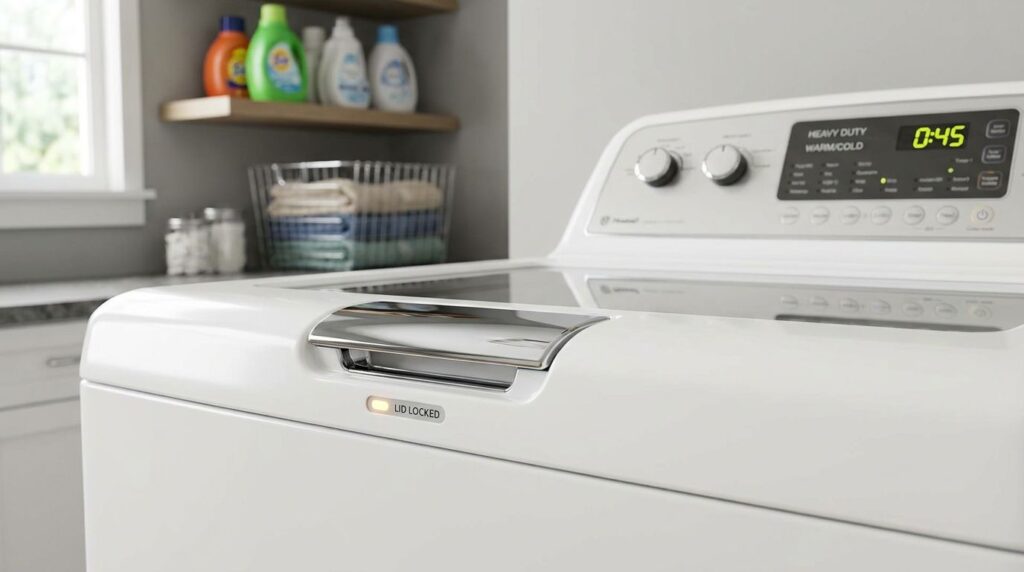
Modern top-load washing machines have a safety feature that’s easy to overlook until it stops working: the lid lock. This small but critical component prevents the machine from spinning while the lid is open — protecting both the machine and anyone nearby from injury. When the lid lock malfunctions, your washer may refuse to start, stop mid-cycle, or display an error code — all very frustrating when you have laundry piling up.
This guide covers everything you need to know about washing machine lid lock problems — from common causes to step-by-step diagnosis to when it’s time to call a technician. If you’re in Coquitlam, Port Coquitlam, or Port Moody, Tricity Repairs is here to help.
What Is the Lid Lock and Why Does It Matter?
The lid lock (also called a lid switch on older models) is an electromechanical component that tells the washing machine’s control board whether the lid is open or closed. During the spin cycle especially, the drum rotates at high speeds — sometimes over 1,000 RPM. If the lid were to open during this time, clothing could get caught in the drum or the machine could shake violently out of position.
The lid lock engages when you close the lid and the wash cycle begins. You’ll typically hear a click when it locks, and the lock light (or indicator) on the control panel will illuminate. The machine won’t start or won’t advance to the spin cycle if the lid lock isn’t engaged.
Common Signs of a Lid Lock Problem
- The washer won’t start at all after you close the lid and press start
- The machine starts the wash cycle but won’t advance to spin
- You see an “Lid” or “LF” error code on the display
- The lid lock indicator light flashes repeatedly
- You can hear the motor attempting to run but the cycle doesn’t progress
- The lid lock clicks but the machine still won’t spin
Causes of Lid Lock Failure
1. A Faulty Lid Lock Assembly
The lid lock itself is a small plastic and electronic component that wears out over time with repeated use. The locking mechanism involves a strike (on the lid) that inserts into the lock body (on the rim), engaging a solenoid that holds it in place. Any of these parts can fail — the solenoid can burn out, the plastic strike can break or deform, or the internal switch contacts can corrode.
A failed lid lock assembly is the most common cause of lid lock issues and requires replacement of the whole unit.
2. The Lid Isn’t Fully Closing
Before assuming the lid lock itself is faulty, check whether the lid is actually closing fully and squarely. Over time, the lid hinges can loosen, causing the lid to sit slightly crooked and preventing the strike from engaging with the lock body properly. Clean the strike and lock body of any detergent buildup or debris that might prevent full engagement.
3. Wiring or Connector Issues
The wiring harness that connects the lid lock assembly to the control board can develop loose connections, broken wires, or corroded terminals — especially in machines that vibrate heavily. If the control board isn’t receiving a signal from the lid lock, it treats the lid as open regardless of its actual position.
Inspecting the wiring requires some disassembly (removing the top panel of the washer), but a visual check for obvious damage or disconnected connectors is something a handy homeowner can do.
4. Control Board Problem
Less commonly, the issue isn’t the lid lock itself but the main control board that interprets its signal. If the board’s input for the lid lock circuit has failed, the machine won’t recognize a properly functioning lid lock. Control board diagnosis typically requires ruling out the lid lock and wiring first.
5. Software Glitch or Stuck Cycle
Sometimes the lid lock gets electronically “stuck” — particularly after a power interruption during a cycle. In this case, performing a reset can resolve the problem without any physical repair. For instructions on resetting your washer, check out How to Reset Any Appliance.
Step-by-Step Diagnosis
Step 1: Try a Reset First
Unplug the washing machine from the wall. Wait a full 60 seconds (not just a quick unplug and replug — the control board needs time to fully discharge). Plug it back in and try a new cycle. This resolves electronic glitches in many cases.
Step 2: Inspect the Lid and Strike
Examine the lid strike — the plastic tab on the underside of the lid that inserts into the lock body. If it’s broken, cracked, or missing, it won’t engage the lock. Also check the lock body opening for debris or detergent residue. Clean both components and test again.
Step 3: Listen for the Lock Click
When you close the lid and press start, listen carefully. A working lid lock will produce an audible click within the first few seconds of a cycle as the solenoid engages. No click at all usually means the lock solenoid isn’t receiving power or has failed. A click that doesn’t hold (you hear it click but then unlock immediately) often indicates a failed solenoid or a wiring issue.
Step 4: Test the Lid Lock with a Multimeter
If you’re comfortable with basic electrical testing, the lid lock can be tested for continuity. Unplug the machine, access the lid lock assembly (usually by removing the top panel), disconnect the wiring harness, and test the switch terminals with a multimeter. A properly functioning lid lock will show continuity when the strike is inserted and open circuit when it’s removed. No continuity in the closed position confirms a failed lock assembly.
Replacing the Lid Lock: DIY Considerations
Lid lock replacement is one of the more manageable DIY washer repairs. On most top-load washers, the process involves removing the top panel (usually held by clips or a few screws at the back), unplugging the wiring harness from the old lid lock, and snapping or screwing the new one into place.
Replacement lid locks are widely available for common brands like Whirlpool, Maytag, Samsung, LG, and GE — typically in the range of a modest parts cost. Make sure you order the exact part number for your model (found on the label inside the lid or at the back of the machine).
For related washing machine troubleshooting, see: Why Your Washing Machine Won’t Spin: 6 Common Causes and Quick Fixes.
Safety Warning: Never Bypass the Lid Lock
It can be tempting to force the machine to run by jamming the lid or bypassing the lock — especially when you’re mid-load and in a hurry. Don’t do it. The lid lock exists because a top-load drum spinning at full speed with an open lid is genuinely dangerous. Bypassing it voids any remaining warranty and creates a real injury risk. Always fix the lid lock properly before resuming use.
When to Call a Professional
If the reset didn’t work, the strike and wiring look fine, and you’ve confirmed the lid lock fails the continuity test — or if you’re not comfortable disassembling your washer — it’s time to call a technician. A professional can replace the lid lock quickly, check the wiring harness for related damage, and confirm the control board is interpreting the lock signal correctly.
Tricity Repairs handles washer repairs throughout Coquitlam, Port Coquitlam, and Port Moody. If your lid lock is keeping you from doing laundry, give us a call at (604) 359-5952 — we’ll get it sorted out fast.
For more signs that your washer needs professional attention, see: Signs Your Washing Machine Needs Repair.
Summary
A washing machine lid lock that isn’t working will prevent your washer from starting or completing cycles. The most common causes are a failed lid lock assembly, a misaligned or broken strike, wiring issues, or a software glitch. Start with a simple reset, inspect the strike for physical damage, listen for the lock click, and test with a multimeter if needed. Lid lock replacement is a manageable DIY job on most machines, but when in doubt, a professional technician can handle it quickly and safely.