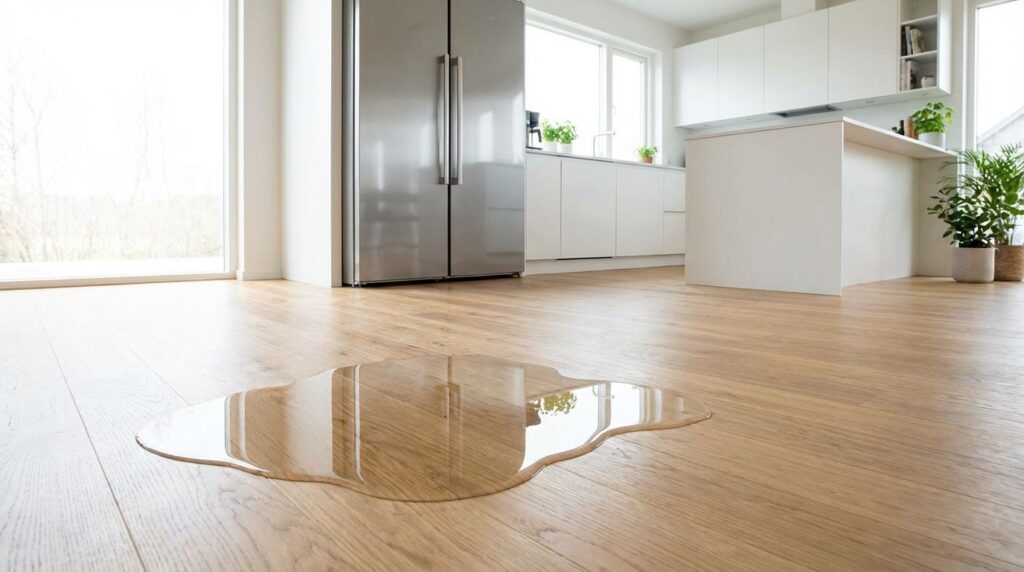
Coming home to a puddle of water underneath your refrigerator is never a welcome sight. Whether it’s a small trickle or a growing pool, a leaking fridge can damage your floors, create a slipping hazard, and signal a problem that only gets worse if ignored. The good news is that many of the most common causes of refrigerator leaks are diagnosable — and some are even fixable — without calling a technician right away.
At Tri-City Repairs, we work with homeowners across Coquitlam, Port Coquitlam, and Port Moody who regularly face this problem. This guide walks you through the most likely reasons your refrigerator is leaking water on the floor, what you can check yourself, and when it’s time to bring in a professional.
The Most Common Reasons a Refrigerator Leaks Water
Before you panic, know that a leaking refrigerator almost always has one of a handful of causes. Here’s a breakdown of the most frequent culprits.
1. Clogged or Frozen Defrost Drain
This is the number one cause of water pooling inside or underneath a refrigerator. Every fridge has a defrost cycle that melts frost buildup on the evaporator coils. That water is supposed to drain through a small hole in the back of the freezer compartment, down a drain tube, and into a drip pan under the fridge where it evaporates naturally.
If that drain hole becomes clogged with food debris or freezes over, the meltwater has nowhere to go — so it overflows and ends up on your floor. Signs of this problem include water pooling inside the fridge on the bottom shelf, ice forming at the base of the freezer, or a wet, slushy feel at the back wall.
What to check: Open your freezer and look at the back wall near the bottom. If you see a buildup of ice, that drain is likely frozen. You can try defrosting it using a turkey baster filled with warm water, or simply unplug the fridge and let it defrost for 24–48 hours with the doors open. If the problem comes back quickly, the drain tube itself may need cleaning.
2. Cracked or Misaligned Drain Pan
The drain pan (also called the drip pan) sits under your refrigerator and collects the water that drips down from the defrost cycle. Under normal conditions, the water evaporates before it fills up. But if the pan is cracked or has shifted out of position, water can overflow onto your floor even when the drain is working perfectly.
What to check: Pull your refrigerator away from the wall and locate the pan at the bottom (usually accessible from the front or back). Remove it carefully and inspect for cracks. Even a hairline fracture can cause steady leaking. If it’s cracked, a replacement pan for your model is typically inexpensive and easy to swap.
3. Faulty Water Inlet Valve
If your fridge has a water dispenser or ice maker, it’s connected to your home’s water supply through a water inlet valve. This valve can crack, corrode, or fail over time — especially in areas with hard water. A failing inlet valve will often drip water behind or underneath the fridge, which may look like it’s coming from the fridge itself.
What to check: Pull the fridge away from the wall and look at the back lower corner where the water line connects. If you see moisture, drips, or mineral deposits around that fitting, the inlet valve is the likely culprit. This is a repair best handled by a professional since it involves shutting off your water supply and working with pressurized lines.
Speaking of water-related wear, The Effects of Mineral Buildup on Your Appliance Performance is worth reading — hard water deposits frequently cause inlet valve and drain issues in refrigerators.
4. Damaged or Worn Door Gaskets
The rubber seals around your fridge and freezer doors (called gaskets or door seals) are designed to keep the cold air in and the warm, humid air out. When a gasket cracks, tears, or loses its flexibility, warm air seeps inside the compartment. That warm air causes excessive condensation and frost buildup, which eventually melts and drips onto the floor.
What to check: Run your hand slowly around the door seals with the door closed. If you feel air leaking through, or if the gasket is visibly cracked or no longer sits flat against the fridge body, it needs replacing. A simple test: close the door on a piece of paper. If you can pull the paper out easily, the seal is no longer effective.
5. Ice Maker Issues
If your refrigerator has an ice maker, it can be a source of leaks in a few different ways. A clogged fill tube (which supplies water to the ice maker mold) can cause water to overflow and drip down. A misaligned ice maker or a cracked ice mold tray can also cause water to escape before it freezes properly.
What to check: Open the freezer and inspect around the ice maker. If you see ice forming in unexpected places, like underneath the ice maker or on the floor of the freezer, the fill tube may be frozen or clogged. In many cases, this can be thawed out using a hair dryer on low heat (carefully, without touching any electrical components).
6. Refrigerator Not Level
This one surprises a lot of people. Your refrigerator needs to be slightly tilted back — about 1/4 inch lower in the rear than the front — so that the drain system works correctly and the doors close properly by themselves. If the fridge leans forward or to one side, water may pool in the wrong areas and eventually overflow.
What to check: Place a level on top of the fridge from front to back and side to side. Most refrigerators have adjustable front feet (sometimes hidden behind a kick panel). Turn them clockwise to raise and counter-clockwise to lower. Getting the level right can solve minor pooling issues surprisingly quickly.
Water Inside the Fridge vs. Water on the Floor — What’s the Difference?
It’s helpful to note where the water is appearing, as this gives clues about the source:
- Water inside the fridge on lower shelves — Usually the defrost drain is clogged.
- Water under the vegetable crisper drawers — Defrost drain overflow is pooling at the lowest point.
- Water directly behind or under the fridge — Likely the drain pan, inlet valve, or a loose water line connection.
- Water pooling at the front of the fridge — Often a drain pan overflow or a leveling issue.
How a Leaking Refrigerator Affects Other Components
Leaving a refrigerator leak unaddressed doesn’t just damage your floors. Over time, moisture inside the fridge compartment can lead to mould growth on shelves and walls, accelerated food spoilage, and increased energy usage as the fridge works harder to maintain temperature. Persistent moisture near the compressor and electrical components creates a risk of corrosion or electrical faults.
If your fridge has been leaking for a while and you’ve noticed it running louder or struggling to maintain temperature, it’s worth reading Signs Your Refrigerator Compressor Is Failing to see if the leak may have caused secondary damage.
Seasonal Factors That Make Leaks Worse
In warmer months, refrigerators work harder and produce more condensation during defrost cycles. The combination of higher indoor humidity and more frequent defrost activity means the drain system gets more of a workout. For Tri-Cities residents, the summer months can cause leaks to appear that weren’t noticeable in winter. Our post on How to Keep Your Refrigerator Cool During Hot Summer Months covers steps you can take to reduce the strain on your fridge and prevent these seasonal issues.
Can You Fix a Refrigerator Leak Yourself?
Some of these fixes are genuinely DIY-friendly:
- Cleaning a clogged defrost drain with warm water
- Replacing a cracked drain pan
- Adjusting the fridge’s leveling feet
- Cleaning or replacing door gaskets on many standard models
However, repairs involving the water inlet valve, internal plumbing, refrigerant lines, or any electrical components should always be handled by a qualified appliance technician. Attempting these without the right tools and knowledge can worsen the problem or create a safety risk.
When to Call Tri-City Repairs
If you’ve checked the obvious culprits and the leak persists — or if the source of the water isn’t clear — it’s time to call a professional. At Tri-City Repairs, our technicians serve homeowners throughout Coquitlam, Port Coquitlam, and Port Moody with fast, honest appliance repair service. We diagnose refrigerator leaks efficiently and carry common parts so most repairs can be completed in a single visit.
Don’t let a small drip turn into water damage. Give us a call at (604) 359-5952 or visit tricityrepairs.ca to book your appointment.
Prevention: How to Stop Refrigerator Leaks Before They Start
A bit of regular maintenance goes a long way toward preventing leaks:
- Clean the defrost drain annually — Pour a small amount of warm water mixed with baking soda down the drain hole to clear any early buildup.
- Inspect door gaskets every 6 months — Look for cracks, warping, or areas that don’t seal tightly.
- Check the drain pan when you clean behind the fridge — It takes only a minute to inspect and empty if needed.
- Don’t overload the freezer — Blocking airflow forces longer defrost cycles and more meltwater.
- Level the fridge after moving it — Always re-check the level any time the fridge is relocated.
Final Thoughts
A refrigerator leaking water on the floor is one of the more common appliance issues homeowners face, but it doesn’t have to be a stressful one. Start with the simplest explanations — a clogged defrost drain or an out-of-level fridge — and work your way up. Most cases can be resolved quickly when caught early.
If you’re in the Tri-Cities area and need a hand diagnosing or fixing the problem, Tri-City Repairs is here to help. We know these appliances inside and out and take pride in delivering reliable, affordable repair service to our neighbours across Coquitlam, Port Coquitlam, and Port Moody.