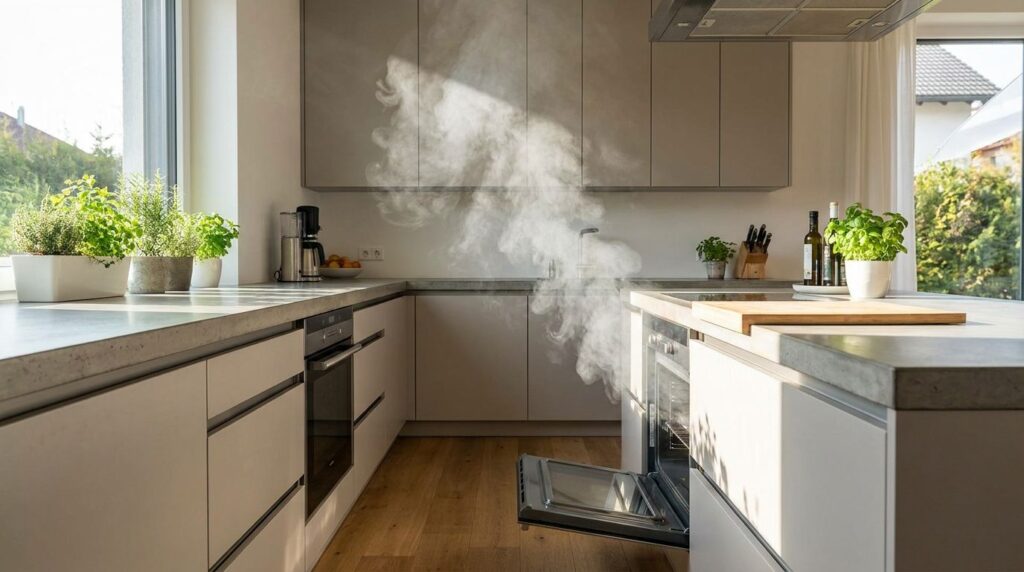
You’ve preheated the oven, slid in your dish, and minutes later a plume of smoke starts drifting from the oven vent. It’s alarming — and rightfully so. But oven smoke is actually a fairly common occurrence with a manageable set of causes. Understanding why your oven is smoking is the first step to stopping it safely and preventing it from happening again.
This guide covers every common reason an oven produces smoke, how to identify which one you’re dealing with, and what to do about it. If you’re in Coquitlam, Port Coquitlam, or Port Moody, Tricity Repairs can help with any oven issues that go beyond a simple cleaning.
First: Is It Dangerous?
Most oven smoke is not immediately dangerous, but it depends on the source. Smoke from burning food residue or grease is unpleasant but generally not hazardous. Smoke with a sharp electrical or chemical smell — or any visible sparks — is a different matter entirely. If you smell burning plastic or electronics, or see sparks, turn off the oven immediately and unplug it or turn off the circuit breaker. Don’t use it again until it’s been professionally inspected.
Common Causes of a Smoking Oven
1. Burnt Food Residue or Grease on the Oven Floor
This is by far the most common cause of oven smoke. Every time something bubbles over, drips, or splatters in the oven, that residue gets baked onto the floor and walls. Over multiple uses, these layers of grease and carbonized food accumulate — and every time you heat the oven, you’re essentially burning them off, producing smoke and sometimes a noticeable smell.
The fix: let the oven cool completely, then clean the interior thoroughly. For the floor, a paste of baking soda and water left overnight, followed by a wipe-down with white vinegar, works well without harsh chemicals. Pay special attention to the area around and under the bake element. For a full cleaning guide, see: How to Deep Clean Your Oven Without Chemicals.
2. Food Spill on the Heating Element
If something has dripped directly onto the bake element (the coiled heating element at the bottom of electric ovens), it will smoke every time the element heats up until it burns off completely. Small amounts usually burn off after a cycle or two; larger spills may take longer and produce more significant smoke.
If you can see visible residue on the element, let the oven cool, wipe away what you can with a damp cloth (element unplugged/oven off), and then run the oven empty at a high temperature to finish burning off the remainder. Avoid scrubbing the element aggressively — they’re fragile and can crack.
3. New Oven “Break-In” Smoke
Brand new ovens almost always produce smoke and a chemical/burning smell during their first one to three uses. This is completely normal: manufacturing oils, protective coatings, and insulation materials inside the oven need to burn off before the appliance settles into normal use. Most manufacturers recommend running the oven empty at a high temperature (around 230°C / 450°F) for 30–60 minutes with good kitchen ventilation before cooking any food in it.
This smoke should clear after the first few uses. If it persists beyond that, something else is causing it.
4. Dirty Broiler Pan or Drip Tray
If your oven has a broiler drawer at the bottom, the drip tray underneath the broiler element accumulates grease every time you broil. If this tray hasn’t been cleaned in a while, the next time you use the oven — even just for baking — the residual grease on the tray can smoke from the ambient heat. Remove and wash the broiler pan and drip tray after every broil use.
5. Grease or Food on the Oven Racks
Oven racks pick up grease and food splatter over time. When the oven heats up, this residue smokes just like spills on the oven floor. Remove racks periodically and soak them in hot soapy water, or scrub them with a baking soda paste. This is one of the most overlooked cleaning steps and one of the most effective for reducing smoke.
6. Self-Clean Cycle Producing Heavy Smoke
The self-clean function heats your oven to extreme temperatures (around 480°C / 900°F) to incinerate all food residue. This process produces significant smoke, particularly if your oven was heavily soiled. It’s completely normal — but if you haven’t cleaned the oven in a long time and there’s a lot of built-up grease, the self-clean cycle can produce enough smoke to trigger smoke detectors.
Before running self-clean: remove racks (the extreme heat damages their finish), wipe out any large food pieces or pooled grease manually, and ensure your kitchen is well ventilated. If you have pets — especially birds, which are extremely sensitive to fumes — remove them from the area before running self-clean.
7. Failing Bake or Broil Element
A heating element that’s cracking or beginning to fail can produce smoke and a burning smell as the element’s insulation or the element itself overheats unevenly. You may also see visible damage on the element — blistering, cracks, or burn marks. A failed element typically causes both smoke and uneven heating or no heat at all.
If you suspect the element, inspect it visually with the oven cold and unplugged. Any visible damage warrants replacement. For related oven troubleshooting, see: Oven Won’t Turn On? Simple Steps to Diagnose It.
8. Oven Insulation Touching the Element
In some cases — particularly after a heavy cleaning, oven door removal, or a repair — oven insulation can shift and come into contact with the heating element. When the element heats up, it scorches the insulation, producing a distinctive burning chemical smell and smoke. This is more common in older ovens where insulation has deteriorated.
How to Stop Oven Smoke Quickly
If your oven is actively smoking while you’re trying to cook:
- Open the oven door briefly to assess the situation — is it a small amount of smoke or significant billowing?
- Turn off the oven if the smoke is heavy or smells electrical.
- For minor food-residue smoke, you can continue cooking if the smoke is manageable, but open a window and turn on the range hood fan.
- After the oven cools, clean it thoroughly before the next use.
- Never use water on a hot oven to stop smoke — the thermal shock can damage the oven and create a steam burn hazard.
Preventing Oven Smoke Going Forward
- Use a baking sheet or roasting rack under anything that might bubble over. A sheet pan on the rack below a casserole dish catches drips before they hit the oven floor.
- Clean up spills promptly — wipe the oven interior once it cools after any spill rather than letting it bake on through multiple uses.
- Clean racks regularly — at least every 2–3 months depending on use.
- Run self-clean before the oven gets heavily soiled, not after years of buildup.
For more on keeping your oven in top shape, see: How to Maintain Your Oven and Prevent Costly Repairs.
When to Call a Professional
If cleaning the oven thoroughly doesn’t stop the smoke, or if the smoke has an electrical or burning-plastic smell, a component is likely failing and needs professional inspection. Tricity Repairs serves Coquitlam, Port Coquitlam, and Port Moody with expert oven repair. Call us at (604) 359-5952 and we’ll diagnose the issue quickly.
Summary
Oven smoke is almost always caused by burnt food residue, grease buildup, or a dirty element — all of which are solved by a thorough cleaning. A new oven will smoke briefly during its break-in period. Electrical or chemical-smelling smoke, or visible sparks, requires immediate shutdown and professional inspection. Regular cleaning is the single most effective prevention strategy for a smoke-free oven.