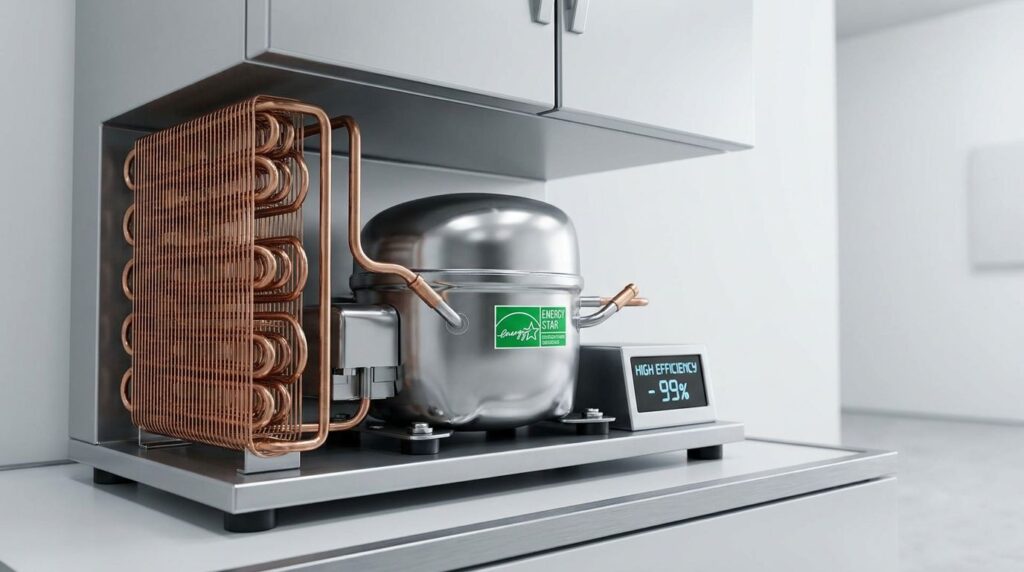
Your refrigerator is designed to cycle on and off throughout the day — running its compressor to cool the interior, then shutting off once it reaches the set temperature. If you’ve noticed that your fridge seems to be running non-stop with little or no pause, it’s telling you something is wrong. A refrigerator that runs constantly isn’t just loud — it’s working harder than it should, using more electricity, and putting extra wear on its compressor. The longer the problem goes unresolved, the more likely it is to result in a premature and costly breakdown.
In this guide, we’ll explain the most common reasons a refrigerator runs all the time, how to troubleshoot each cause, and when to call for professional repair. If you’re in Coquitlam, Port Coquitlam, or Port Moody, Tricity Repairs can diagnose and fix refrigerator problems quickly.
Is It Normal for a Refrigerator to Run a Lot?
First, some context: modern refrigerators are designed to run anywhere from 30% to 80% of the time depending on the model, ambient temperature, and how full the fridge is. A fridge in a hot kitchen, one that’s just been loaded with warm groceries, or one that’s been opened frequently throughout the day will run more. Some high-efficiency models run quieter and more continuously than older on/off cycling compressors.
The concern is when a fridge that normally cycled on and off regularly now seems to never stop — especially if the interior temperature is warmer than expected, or if your electricity bill has noticeably increased. That combination is a clear signal that something is wrong.
Common Causes of a Refrigerator Running Constantly
1. Dirty or Dusty Condenser Coils
Condenser coils release heat from the refrigerant into the surrounding air. When they’re coated in dust, pet hair, and debris, they can’t dissipate heat efficiently — and the compressor has to run longer to compensate. This is the single most common cause of a refrigerator running excessively, and it’s entirely preventable with regular cleaning.
Condenser coils are located either underneath the fridge (accessed by removing the front kick panel) or behind it (on older models). Clean them every 6–12 months using a vacuum and a coil brush. After cleaning, many homeowners report an immediate improvement in cooling efficiency and compressor cycling. For a full walkthrough, see our detailed guide: Common Refrigerator Mistakes That Lead to Costly Repairs.
2. Damaged or Worn Door Gaskets
The rubber seals around your refrigerator and freezer doors are what keep cold air in and warm air out. When these gaskets crack, harden, or pull away from the door frame, warm air constantly seeps into the cabinet. The refrigerator senses the temperature rising and keeps the compressor running to compensate — but it can never truly win against a continuously leaking seal.
Test your door seals by closing the door on a piece of paper. If you can pull the paper out without resistance, the seal in that area is weak. Check all four sides of both doors. Replace any gaskets that are visibly cracked, torn, or hardened.
3. Thermostat or Temperature Control Issues
The thermostat or temperature sensor monitors the internal temperature and tells the compressor when to turn on and off. If the thermostat is miscalibrated or failing, it may consistently read the temperature as too warm — causing the compressor to run continuously even when the interior is already cold enough.
A faulty thermostat can also cause the opposite problem (a fridge that doesn’t run enough and warms up), so if your fridge is running constantly AND the interior is at the correct temperature, the thermostat is a likely suspect. Testing a thermostat requires a multimeter.
4. Defrost System Failure
Refrigerators have an automatic defrost cycle that runs periodically to melt any ice buildup on the evaporator coils. If the defrost heater, defrost thermostat, or defrost timer fails, ice builds up on the evaporator coils until they’re completely frosted over. Frosted coils can’t absorb heat properly — the fridge gets warm, the compressor runs constantly trying to cool it down, and the situation compounds.
Signs of defrost failure include ice buildup at the back of the freezer, the fridge running constantly but not maintaining temperature, and in severe cases, frost visible through the freezer vents. You may also notice the freezer is cold but the refrigerator section is warm.
5. Refrigerant Leak
If your refrigerator is running constantly but the interior isn’t reaching the correct temperature — especially if the freezer is barely cold — a refrigerant leak may be the cause. Refrigerant is the fluid that circulates through the cooling system. Without an adequate charge, the system can’t remove enough heat from the interior regardless of how long the compressor runs.
Refrigerant leaks require professional diagnosis and repair by a certified technician. Handling refrigerant requires licensing in Canada. For related troubleshooting, see: Refrigerator Running But Not Cooling? Here’s Why.
6. Condenser Fan Motor Failure
The condenser fan circulates air over the condenser coils to help dissipate heat. If this fan motor fails, the coils overheat and the compressor must work much harder — often continuously — to maintain interior temperature. You may notice the area around the back or bottom of the fridge feeling unusually hot, or hear the compressor laboring with more noise than usual.
7. Poor Location or Ambient Temperature
Sometimes the refrigerator itself is fine, but it’s working against difficult conditions. A fridge placed in direct sunlight, next to a stove, in a garage during summer, or in a room that’s consistently above 30°C will run significantly more than one in a climate-controlled kitchen. If you’ve recently moved the fridge or experienced unusual heat, consider whether environment is the factor before assuming a component has failed.
8. Overfilling or Underfilling
An extremely overfilled fridge blocks air circulation, creating warm spots that the compressor constantly tries to address. An almost-empty fridge lacks thermal mass, so temperature swings more dramatically each time the door opens — triggering more compressor cycles. Aim for a fridge that’s well-stocked but not packed so tightly that air can’t circulate freely.
Step-by-Step Troubleshooting
- Clean the condenser coils — this is the first thing to do, as it’s free, simple, and the most common cause.
- Inspect door gaskets — check all four sides of both fridge and freezer doors with the paper test.
- Check the temperature settings — confirm you’re set to 37°F (3°C) in the fridge, 0°F (-18°C) in the freezer.
- Verify the condenser fan is running — you should hear it when the compressor is on. Listen near the back bottom of the fridge.
- Check for ice buildup in the freezer — look at the back wall. Heavy frost suggests a defrost failure.
- Observe the interior temperature — is the fridge actually cold enough, or is it running constantly and still warm?
When Running Constantly Damages the Compressor
The compressor is the most expensive component in a refrigerator — essentially the heart of the cooling system. It’s designed to cycle on and off in a duty cycle that allows it to rest and cool down. Running continuously for hours or days on end dramatically shortens compressor life. A compressor that fails due to overwork can cost more to replace than a new mid-range refrigerator.
This is why addressing a constantly running fridge quickly matters. For context on appliance lifespans and repair decisions, read: How Long Do Appliances Last? A Complete Lifespan Guide.
When to Call for Professional Repair
If you’ve cleaned the coils, checked the gaskets, and the fridge is still running constantly — especially if the interior temperature is off — it’s time for a professional diagnosis. Refrigerant leaks, defrost heater failures, thermostat failures, and compressor issues all require trained technicians with the right tools and parts.
Tricity Repairs serves Coquitlam, Port Coquitlam, and Port Moody with expert refrigerator repair. We diagnose the root cause accurately and carry parts for all major brands. Call us at (604) 359-5952 for a same-week service appointment.
Summary
A refrigerator running constantly is most commonly caused by dirty condenser coils, damaged door gaskets, a failing defrost system, or a refrigerant leak. Start with the free fixes — cleaning the coils and inspecting the door seals — before moving to component-level diagnosis. Acting quickly protects your compressor and keeps your energy bills in check. When the problem goes beyond simple maintenance, Tricity Repairs is here to help across the Tri-Cities.