Refrigerators are never completely silent — a low, steady hum from the compressor and occasional sounds from the ice maker or water dispenser are completely normal. But when your fridge starts making a loud, persistent buzzing or humming that it didn’t make before, it’s telling you something has changed. Knowing how to distinguish normal refrigerator noise from a sign of trouble can save you from an unexpected breakdown — and an expensive food loss.
This guide covers every common cause of a loud buzzing or humming refrigerator, how to identify which one you’re dealing with, and what to do about it. If you’re in Coquitlam, Port Coquitlam, or Port Moody, Tricity Repairs is here to help.
Normal Refrigerator Sounds vs. Problem Sounds
First, some context on what’s normal. A healthy refrigerator produces a low compressor hum (30–50 dB), occasional clicks as the compressor cycles on and off, water sounds if it has an ice maker, and a gentle fan hum from the condenser and evaporator fans. These sounds are expected and nothing to worry about.
Sounds that warrant investigation include a buzz or hum that is noticeably louder than usual, a sound that’s new and consistent (didn’t exist a week ago), a buzz that vibrates the floor or nearby cabinets, or humming accompanied by the fridge not cooling properly.
Common Causes of Loud Buzzing or Humming
1. Dirty or Blocked Condenser Coils
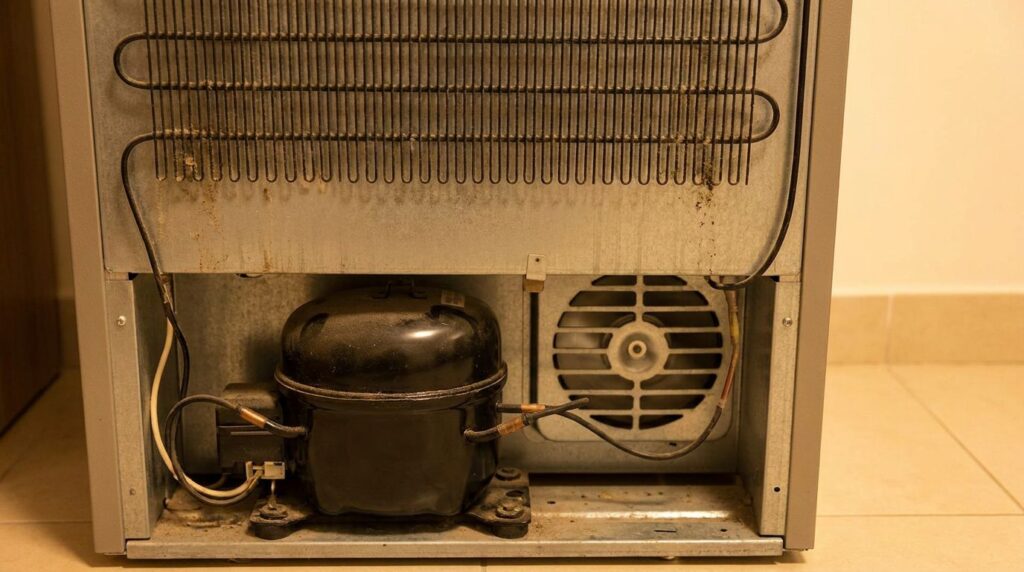
Clogged condenser coils are one of the most common causes of a louder-than-normal compressor hum. When coils are coated in dust and pet hair, they can’t dissipate heat efficiently, so the compressor runs harder and longer — producing more noise in the process. The buzz is the compressor working overtime.
Clean the condenser coils (located at the back or bottom of the fridge) with a vacuum and a coil brush every 6–12 months. Many homeowners report an immediate reduction in noise after cleaning. This is the first thing to try before any other diagnosis. For full instructions, see: How to Clean Your Refrigerator Condenser Coils.
2. Condenser Fan Motor Failing
The condenser fan circulates air over the condenser coils to help remove heat. When the fan motor bearings start to wear out, they produce a humming, buzzing, or rattling noise — often with a slight vibration you can feel if you touch the back of the fridge. The sound typically gets worse as the motor heats up.
To identify the condenser fan as the source: pull the fridge away from the wall and listen. If the buzz is coming from the back bottom area and increases when the compressor runs, the condenser fan motor is a strong candidate. A failing condenser fan can also cause the fridge to run warmer than usual since it’s no longer cooling the coils effectively.
3. Evaporator Fan Motor Wearing Out
Inside the freezer compartment, the evaporator fan circulates cold air through both the freezer and refrigerator sections. When its motor begins to fail, it produces a high-pitched humming, buzzing, or squealing sound that often becomes louder when you open the freezer door (since the door switch that normally quiets the fan is no longer engaged).
If the buzzing gets noticeably louder when you open the freezer, the evaporator fan motor is likely the source. You may also notice the refrigerator section becoming warmer than usual, since the fan is no longer moving cold air efficiently.
4. Compressor Noise — Normal Aging vs. Failing
The compressor is the most common source of refrigerator humming. A compressor that’s aging but still functional gradually gets louder over time. A compressor that’s beginning to fail may produce a louder buzz, rattling, or knocking at startup, or may short-cycle (start and stop repeatedly).
To narrow down whether it’s the compressor: the sound should be coming from the back bottom area of the fridge, it should correlate with the compressor’s on/off cycles, and the fridge should still be maintaining temperature if the compressor is aging but not yet failed. A compressor that’s both noisy AND not cooling points to a more serious problem requiring professional assessment. For more on compressor signs, see: Signs Your Refrigerator Compressor Is Failing.
5. Refrigerator Not Level
A fridge that isn’t properly levelled can vibrate against the floor or adjacent cabinetry, amplifying normal compressor and fan vibrations into an annoying buzz or hum. This is surprisingly common and completely free to fix. Check that all four feet (or the two front levelling feet plus the rear rollers) are making contact with the floor and that the fridge doesn’t rock when you push a corner.
Adjust the levelling feet by turning them clockwise (to lower) or counterclockwise (to raise) until the fridge is stable and doesn’t vibrate. Also check that the fridge isn’t touching the wall behind it or the cabinets on either side — contact with surrounding surfaces amplifies vibration significantly.
6. Ice Maker Filling or Cycling
If your refrigerator has an ice maker, the filling and ice-ejection cycles produce buzzing and humming sounds — sometimes quite loud — that are completely normal. The water inlet valve buzzes when it opens, and the ice maker motor buzzes when it ejects ice. If you can correlate the sound to the ice maker area and it happens periodically rather than continuously, this is likely the source.
If the ice maker is buzzing continuously without making ice, the water inlet valve may be faulty or the water supply line may be restricted. See our guide on refrigerator ice maker problems for more details.
7. Items Vibrating on Top of or Inside the Fridge
Bottles, containers, or items stored on top of the refrigerator can vibrate against each other at certain compressor frequencies, creating an annoying buzz that seems to come from the fridge itself. Check what’s on top and rearrange or remove items. Similarly, bottles and containers inside the fridge resting against each other can amplify vibrations from the compressor.
Locating the Source of the Noise
To identify where the buzz is coming from, try these steps:
- Listen with the doors closed — if the buzz is external, you’ll hear it clearly without opening.
- Open the freezer door — if the noise changes, the evaporator fan or freezer components are involved.
- Pull the fridge away from the wall — if the noise is loudest from the back, it’s condenser fan, compressor, or coils.
- Place your hand on the back — feel for vibration to confirm the general area.
- Check items on top and inside — remove them and see if the noise changes.
When to Call a Professional
If cleaning the coils and levelling the fridge don’t resolve the noise, and you’ve confirmed it’s coming from a fan or the compressor area, a technician can test the fan motors and compressor quickly and accurately. Fan motor replacement is an affordable repair; compressor replacement is more significant and warrants a repair-versus-replace consideration for older fridges.
Tricity Repairs serves Coquitlam, Port Coquitlam, and Port Moody with refrigerator repair. Call us at (604) 359-5952 for a fast diagnosis. For more on refrigerator maintenance, see: Common Refrigerator Mistakes That Lead to Costly Repairs.
Summary
A loud buzzing or humming refrigerator is most commonly caused by dirty condenser coils, a failing condenser or evaporator fan motor, a compressor working harder than it should, or an unlevel fridge vibrating against the floor or cabinets. Start with the free fixes — cleaning coils, levelling the fridge, and clearing items off the top. If the noise persists or the fridge isn’t cooling properly, a professional diagnosis will identify the failing component quickly.