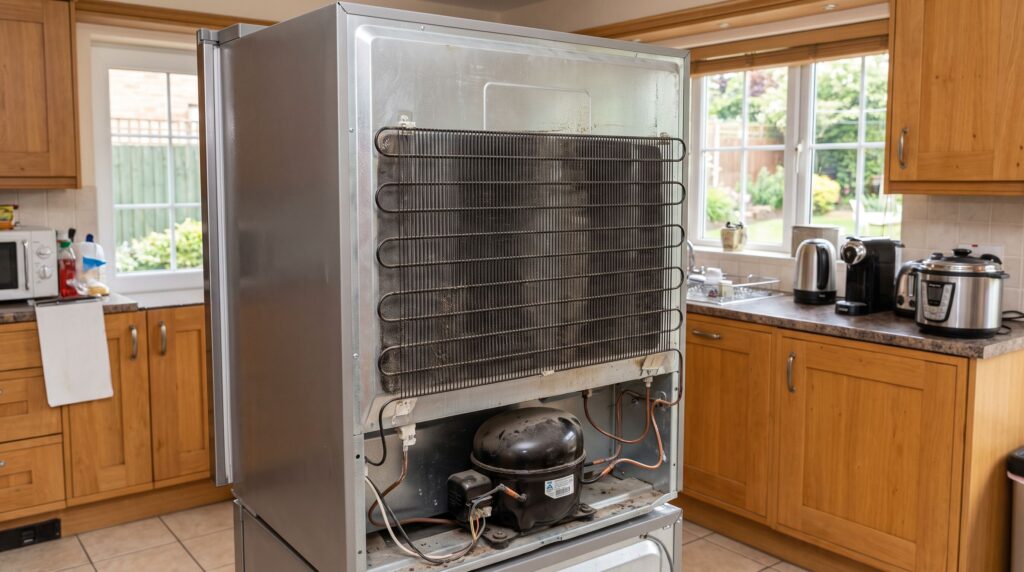
A refrigerator that turns on and off frequently — cycling every few minutes rather than the normal 2–3 times per day — is a sign that something isn’t right. This behaviour, known as short cycling, means the compressor is running in short bursts and the refrigerator isn’t completing full cooling cycles. Left unaddressed, it leads to poor cooling performance, higher energy bills, and premature wear on the compressor. This guide covers every cause and what to do about it.
Tricity Repairs serves Coquitlam, Port Coquitlam, and Port Moody for all refrigerator repairs.
What “Normal” Refrigerator Cycling Looks Like
A normally functioning refrigerator runs the compressor for roughly 4–8 hours per day, spread across 2–3 cycles. Each cycle runs for approximately 20–30 minutes, then shuts off as the interior reaches the target temperature. A compressor cycling every 5–10 minutes, or that seems to run almost continuously but shuts off briefly, is short cycling.
Common Causes of Short Cycling
1. Dirty or Blocked Condenser Coils
The condenser coils (located at the back or beneath the fridge) release the heat extracted from the interior into the room. When they’re coated in dust and pet hair, they can’t dissipate heat efficiently — so the compressor overheats and shuts off on thermal overload protection, then restarts when it cools down. This creates rapid on/off cycling.
Cleaning the condenser coils is the single most impactful maintenance task for a refrigerator. Unplug the fridge, access the coils (usually by removing the rear access panel or the front grille), and vacuum them thoroughly. For more on this, see: Common Refrigerator Mistakes That Lead to Costly Repairs.
2. Faulty Condenser Fan Motor
On refrigerators with condenser coils beneath or at the back, a fan circulates air over the coils and compressor to aid heat dissipation. If this fan motor is failing, airflow is reduced and the compressor overheats — triggering the same thermal overload short cycling as dirty coils, even if the coils themselves are clean. You can check whether the condenser fan is running when the compressor is on by listening near the base of the fridge.
3. Overcharged or Leaking Refrigerant
If the refrigerant charge is too high (overcharged, usually after an improper service), the system pressure rises abnormally and the high-pressure cutout switch trips to protect the compressor — causing it to shut off prematurely. A refrigerant leak causes the opposite: low pressure, which can also trigger cutouts. Both require a licensed refrigeration technician with recovery equipment to diagnose and correct. Refrigerant issues cannot be diagnosed or fixed DIY.
4. Faulty Start Relay
The start relay is a small component attached to the side of the compressor that provides the initial current surge needed to start the motor. If the relay is failing, the compressor may start momentarily then shut off before completing a cycle, or fail to start and retry repeatedly. Shake the start relay — if you hear a rattling sound inside, it has failed. A replacement start relay is inexpensive and a straightforward repair. For related issues, see: Refrigerator Running But Not Cooling.
5. Faulty Temperature Control Thermostat
The cold control thermostat (or temperature control) senses the interior temperature and signals the compressor to run when cooling is needed. A faulty thermostat can send incorrect signals — telling the compressor to shut off before the target temperature is reached, or cycling it on and off erratically. On mechanical thermostat models, you can test by turning the thermostat dial through its range and listening for a click. No click often indicates a failed thermostat.
6. Refrigerator Placement and Ambient Temperature
A refrigerator placed next to a heat source (oven, direct sunlight through a window, heating vent) or in a room that’s too hot will run more frequently — though this is usually extended running rather than true short cycling. Similarly, a fridge placed in a very cold garage (below about 10°C/50°F) may short cycle because the ambient temperature keeps the thermostat satisfied before adequate cooling is achieved.
Short Cycling vs. Normal Cycling
Before diagnosing a problem, confirm the cycling is actually abnormal. A fridge that runs frequently on a hot summer day, or right after being loaded with warm groceries, is behaving normally. Short cycling to diagnose is compressor run times consistently under 10 minutes with brief off periods, repeated throughout the day regardless of door use or ambient conditions.
When to Call a Technician
After cleaning the condenser coils, if the cycling continues, the condenser fan motor, start relay, or thermostat likely needs testing and replacement. Refrigerant issues always require professional service. Tricity Repairs serves Coquitlam, Port Coquitlam, and Port Moody — call us at (604) 359-5952. Also see: Refrigerator Making Loud Noises? What They Mean.
Summary
A refrigerator that keeps starting and stopping is usually dealing with heat dissipation problems — dirty condenser coils are the most common cause and the easiest to fix. After that, check the condenser fan, start relay, and temperature control thermostat. Refrigerant-related short cycling requires professional diagnosis and service.