You’ve loaded the dishwasher, added the detergent, and pressed start — but something’s wrong. The machine hums, the cycle begins, but there’s no water entering the tub. Or it fills partially and stops. A dishwasher that won’t fill with water can’t clean anything, and the problem can range from a simple fix (a kinked hose) to a component that needs replacement (a failed inlet valve). Knowing how to work through the possibilities systematically will help you identify the cause quickly.
This guide covers every reason a dishwasher might not fill with water, how to test each one, and what repairs are involved. If you’re in Coquitlam, Port Coquitlam, or Port Moody, Tricity Repairs can handle any dishwasher repair you need.
How Dishwasher Filling Works
When a dishwasher starts a cycle, the control board opens the water inlet valve, which allows water from your household supply line to flow into the tub. A float switch (a small buoy inside the tub) monitors the water level and signals the control board to close the inlet valve when enough water has entered. The entire fill process typically takes 60–90 seconds on most machines.
Failures anywhere in this chain — the supply line, the inlet valve, the float switch, or the control board — can prevent proper filling.
Common Causes of a Dishwasher Not Filling
1. Water Supply Valve Is Turned Off
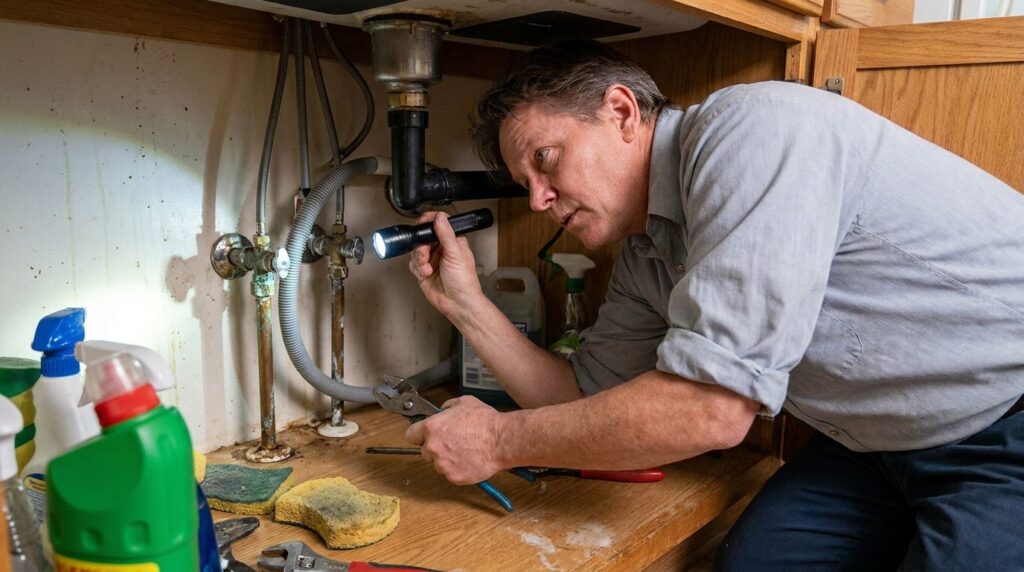
Start with the simplest possibility. Under the kitchen sink, there’s a shut-off valve on the water supply line that feeds the dishwasher. If this valve is partially or fully closed — perhaps after plumbing work or a kitchen renovation — the dishwasher won’t receive water. Locate the valve (it connects to a hose that runs from under the sink to behind the dishwasher) and ensure it’s fully open by turning counterclockwise as far as it will go.
2. Kinked or Blocked Water Supply Hose
The supply hose connecting the shut-off valve to the dishwasher’s inlet valve can become kinked if the dishwasher has been pushed back against the cabinet too aggressively, or if the hose routing was disturbed during a repair or cleaning. A kinked hose restricts or completely blocks water flow. Pull the dishwasher forward slightly (after disconnecting power) and check the full length of the supply hose for any sharp bends or kinks.
3. Clogged or Failed Water Inlet Valve
The water inlet valve is the electromechanical gate that opens when the control board signals it to fill. It can fail in two ways: the solenoid coil can burn out (preventing it from opening at all), or the valve screen can become clogged with mineral scale or debris (restricting flow).
To check the screen: turn off the water supply, disconnect the supply hose from the inlet valve (usually accessible by pulling the dishwasher out slightly or removing the kick plate), and look inside the valve port for a mesh screen. Clean any visible debris or scale. If the screen is clear but the valve still doesn’t open, the solenoid coil may have failed — test with a multimeter for continuity. A failed inlet valve requires replacement, which is one of the most common dishwasher repairs.
4. Float Switch Stuck in the “Full” Position
The float switch is a small plastic cylinder, usually located in the front corner of the dishwasher tub floor. It rises with the water level and when it reaches a certain height, it signals the control board to stop filling. If debris, food particles, or scale cause the float to stick in the raised position, the dishwasher’s control board thinks the tub is already full — and won’t open the inlet valve at all.
Open the dishwasher door and find the float (it looks like a small dome or mushroom shape). Lift it by hand — it should move freely up and down with no sticking. Clean around its base and ensure nothing is lodged underneath it. A stuck float is a common and very easy fix.
5. Door Latch Not Fully Engaged
Dishwashers won’t fill or run if the door latch isn’t fully engaged — it’s a safety feature that prevents water from escaping with the door open. If the latch is worn, misaligned, or if something is preventing the door from closing completely, the machine may start the cycle (lights come on, timer runs) but never actually fills with water.
Check that the door closes with a firm click and that the latch mechanism is engaging properly. Look for debris on the door seal that might be preventing a full close. If the latch itself is worn or broken, it should be replaced.
6. Control Board or Timer Malfunction
If the control board that governs the fill cycle has a fault, it may not send the signal to open the inlet valve even when everything else is working correctly. Control board issues are typically diagnosed after ruling out all of the above causes. Signs include error codes on the display, inconsistent behaviour across cycles, or the machine starting normally but stopping at the fill stage every time.
7. Low Water Pressure
Dishwashers require a minimum water pressure — typically around 20 PSI — to fill properly. If your home’s water pressure is borderline, the dishwasher may fill very slowly or not at all. Check water pressure at a nearby tap; if flow seems weak throughout the home, the issue may be with your main supply rather than the dishwasher itself.
Step-by-Step Troubleshooting
- Confirm the supply valve is fully open under the sink.
- Check the supply hose for kinks after pulling the dishwasher slightly forward.
- Inspect the float switch — lift it by hand to confirm it moves freely.
- Check the door latch — does the door click shut firmly?
- Clean the inlet valve screen — turn off water, disconnect hose, clear the screen.
- Listen during the fill phase — do you hear a buzzing or humming from the valve area? That suggests the valve is receiving power but not opening (clogged or failed).
- Check for error codes on the display — consult your manual for what they mean.
For related dishwasher issues, see: Dishwasher Not Draining: Troubleshooting Guide.
Can Running Without Water Damage the Dishwasher?
Yes. The wash pump in a dishwasher is designed to circulate water, not run dry. If the dishwasher runs through a cycle without water and the pump runs dry, it can overheat and damage the pump impeller and seal. If you notice the dishwasher isn’t filling, cancel the cycle promptly rather than letting it run through.
When to Call a Professional
If the float switch is free, the supply is on, the hose is clear, and the inlet valve screen is clean but the dishwasher still won’t fill, the inlet valve solenoid or the control board needs professional testing and likely replacement. Tricity Repairs serves Coquitlam, Port Coquitlam, and Port Moody with expert dishwasher repair. Call us at (604) 359-5952 for a quick diagnosis.
For more dishwasher maintenance tips, see: Dishwasher Drying Tricks That Actually Work.
For more on keeping your dishwasher in top shape, see: Why Your Dishwasher Leaves White Film on Glasses and How to Fix It.
Summary
A dishwasher that won’t fill is usually caused by a turned-off supply valve, a stuck float switch, a clogged inlet valve screen, or a door latch that isn’t fully engaging. Work through these checks in order — most are quick and free. If the inlet valve solenoid has failed or the control board is faulty, a technician can replace the component and restore full function efficiently.