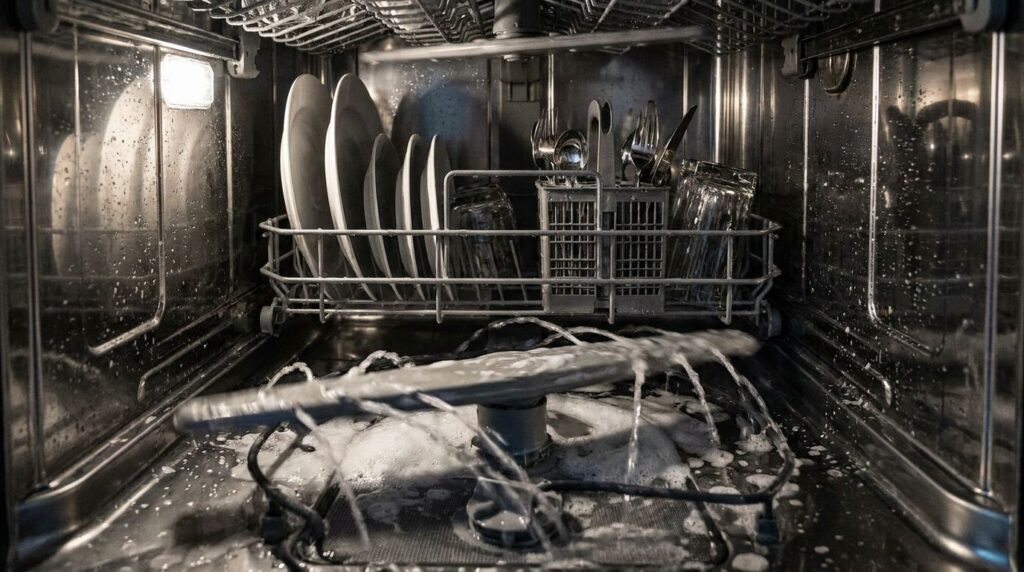
A dishwasher makes noise — that’s expected. The sound of water spraying, the hum of the pump, the occasional click of the door latch are all part of normal operation. But when your dishwasher suddenly starts making loud banging, grinding, rattling, or high-pitched squealing noises it didn’t used to make, something has changed. Loud dishwasher noises are almost always diagnosable — and usually fixable without replacing the appliance.
This guide covers the most common dishwasher noises, what’s causing them, and what you can do about each one. If you’re in Coquitlam, Port Coquitlam, or Port Moody, Tricity Repairs can diagnose and repair your dishwasher efficiently.
Banging or Thumping Sounds
Cause: Spray Arms Hitting Dishes or Rack Items
This is the most common cause of banging and thumping in a dishwasher. The spray arms rotate as water is forced through them, and if a dish, utensil, or pan is positioned in a way that the arm clips it during rotation, you’ll hear a repetitive banging or thumping that matches the arm’s rotation speed.
Open the dishwasher and manually spin each spray arm — it should rotate freely through a full 360° without touching anything. Check for tall items in the lower rack that might be in the spray arm’s path, and ensure utensils in the cutlery basket aren’t sticking up high enough to be struck. Rearranging the load usually solves this immediately.
Cause: Item Fallen Through the Rack
Small items — a teaspoon, a bottle cap, a small lid — can fall through the bottom rack and into the tub floor area where the spray arm rotates. The spray arm then hits the item repeatedly during the cycle, producing a banging or scraping sound. Check the tub floor and the area around the filter after hearing this type of noise.
Grinding or Scraping Sounds
Cause: Foreign Object in the Pump or Filter
A grinding or scraping noise during the wash cycle — especially if it’s continuous rather than rhythmic — often indicates a foreign object has made its way into the wash pump or circulation pump. Glass fragments, food debris, small bones, or hard plastic pieces can pass through the filter area and get drawn into the pump impeller, where they cause grinding sounds and potentially damage the pump.
Clean the filter assembly thoroughly — on most dishwashers, the cylindrical filter at the bottom of the tub unscrews counterclockwise and lifts out. Remove and rinse it, then check the area beneath and around it for any debris. If you can hear grinding but the filter area is clear, the object may be inside the pump itself — a job for a technician to access safely. For more on dishwasher filters, see: Dishwasher Not Draining: Troubleshooting Guide.
Cause: Failing Wash Pump Motor
The circulation pump motor that drives water through the spray arms can develop worn bearings or a damaged impeller over time. When this happens, it produces a grinding, humming, or growling sound that gets worse as the motor deteriorates further. Unlike the sudden grinding of a foreign object, motor bearing noise tends to develop gradually and get progressively louder over weeks or months.
A failing wash pump motor typically needs replacement — it’s one of the more significant dishwasher repairs but is usually still more economical than a new machine.
Rattling Sounds
Cause: Loose Dishes, Glasses, or Utensils
Rattling that occurs throughout the cycle is often just dishes vibrating against each other or against the rack tines. Lightweight plastic items, wine glasses, and mugs are particularly prone to rattling when the spray arms create turbulence. Ensure items are securely seated in their rack positions, that glasses aren’t touching each other, and that plastic items are weighted down or positioned securely.
Cause: Loose Dishwasher Mounting
If the dishwasher isn’t properly secured to the underside of the counter (most dishwashers are held in place by two mounting brackets under the counter lip), the entire machine can vibrate during operation, creating a rattling or buzzing that seems to come from everywhere. Check that the mounting brackets are tightened and that the dishwasher’s levelling feet are adjusted so the machine sits stably without rocking.
High-Pitched Squealing or Whining
Cause: Failing Drain Pump
The drain pump evacuates water from the tub at the end of each wash or rinse phase. When its motor bearings wear out or its impeller becomes damaged, it can produce a high-pitched squealing or whining sound — often loudest at the end of the wash cycle when the machine is draining. This sound may start intermittently and become consistent as the pump continues to degrade.
A failing drain pump can eventually cause drainage problems if the impeller seizes or the motor fails entirely. Replacing the drain pump before it fails completely prevents the inconvenience of a flooded dishwasher tub. For related issues, see: Why Is Your Dishwasher Taking Too Long to Finish a Cycle?.
Cause: Water Inlet Valve Buzzing
A high-pitched buzzing or whining at the start of the cycle — when the dishwasher is filling — is often the water inlet valve. The valve solenoid vibrates at a frequency that can produce a noticeable whine, especially when water pressure is borderline or the valve’s internal components are beginning to wear. This sound during filling is distinct from pump noise during washing or draining.
Humming That’s Louder Than Usual
Cause: Normal Operation — But Check Water Pressure
A dishwasher’s wash pump produces a steady hum during the main wash phase — this is completely normal. However, if the hum is noticeably louder than it used to be, it may indicate the pump is working harder than normal due to low water pressure, a partially clogged spray arm, or the early stages of pump bearing wear.
Clean the spray arms thoroughly (see our guide: How to Clean Your Dishwasher Spray Arm) and ensure water pressure is adequate before concluding the pump is failing.
Diagnosing Dishwasher Noise: A Quick Guide
- Banging/thumping — rhythmic: Spray arm hitting a dish or fallen object. Check loading and tub floor.
- Grinding — sudden onset: Foreign object in pump or filter area. Clean filter immediately.
- Grinding — gradual onset: Pump motor bearing wear. Professional assessment needed.
- Rattling throughout cycle: Loose dishes or unsecured machine. Adjust loading and check mounting.
- Squealing during drain: Drain pump bearing wear. Schedule replacement before it fails completely.
- Whining at fill: Water inlet valve. Monitor — replace if the sound worsens or filling slows.
When to Call a Professional
Grinding from a pump, squealing from a drain motor, and continuous unexplained noise that persists after clearing the filter and adjusting loading all warrant professional diagnosis. Catching pump wear early — before the pump fails entirely — keeps repair costs lower and prevents a flooded dishwasher tub mid-cycle.
Tricity Repairs serves Coquitlam, Port Coquitlam, and Port Moody with expert dishwasher repair. We diagnose noise issues accurately and carry parts for all major brands including Bosch, Samsung, LG, Whirlpool, and KitchenAid. Call us at (604) 359-5952 for a same-week service appointment.
Summary
Loud dishwasher noises are almost always diagnosable by sound type: banging points to spray arm interference, grinding suggests a foreign object or failing pump, rattling is usually loose dishes or an unsecured machine, and squealing indicates a wearing drain pump or inlet valve. Start with the free checks — clear the filter, adjust the load, spin the spray arms. For noise that persists or involves pumps and motors, a technician can identify and fix the issue before it leads to a more costly breakdown.