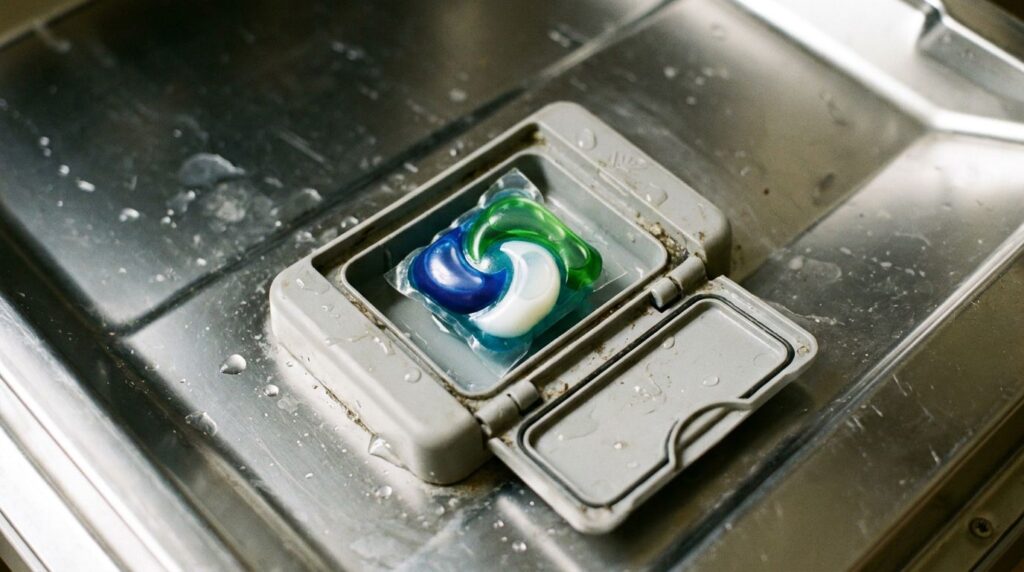
You open the dishwasher after a cycle and find the detergent pod sitting intact in the dispenser door — completely undissolved. Or you notice dishes aren’t coming out clean and realize the dispenser door never opened during the wash. A dishwasher detergent dispenser that won’t open is a surprisingly common problem, and it almost always results in a full cycle with no actual cleaning taking place.
In this guide, we’ll cover every reason a dishwasher detergent dispenser fails to open, how to identify the cause, and what you can do to fix it. If you’re in Coquitlam, Port Coquitlam, or Port Moody, Tricity Repairs is here to help with any dishwasher issue.
How the Detergent Dispenser Works
The detergent dispenser is a small compartment in the dishwasher door with a spring-loaded lid. At a specific point in the main wash cycle — usually about 10–15 minutes in, once the water has reached the right temperature — the control board sends a signal to a wax motor or bi-metal actuator that releases the spring latch, flipping the dispenser door open. The detergent then falls or dissolves into the hot water circulating through the tub.
If the signal isn’t sent, the latch doesn’t release, or there’s a physical obstruction, the dispenser door stays closed and the cycle runs without detergent.
Common Causes of a Dispenser That Won’t Open
1. Dispenser Door Is Blocked by a Dish or Utensil
This is the most common cause — and the easiest to fix. A tall item in the bottom rack (a pot, a cutting board, a baking pan) can physically block the dispenser door from swinging open. The spring releases, but the door can’t move past the obstruction, so detergent stays trapped inside.
Check your dish loading pattern. The dispenser is typically located on the inside of the door near the bottom. Ensure nothing in the bottom or lower dish rack is positioned in front of or directly below the dispenser. Rearranging your loading to keep a clear path for the dispenser door is usually all that’s needed.
2. Detergent Clumped or Residue Blocking the Latch
If old detergent residue, humidity, or a partially dissolved pod has accumulated around the dispenser latch and hinge, it can effectively glue the door shut. Detergent powder is especially prone to clumping if the dispenser gets wet before the cycle starts — this can happen if dishes drip onto the dispenser while loading.
Clean the dispenser thoroughly with a damp cloth and a toothbrush, paying close attention to the latch mechanism, the hinge points, and the interior of the dispenser cup. Make sure the latch clicks freely when you close and open it by hand with the dishwasher empty. Also ensure the dispenser is dry before adding detergent, and use fresh detergent — old or damp pods can stick and refuse to release.
3. Worn or Broken Dispenser Spring
The spring that pops the dispenser door open can weaken or break over time. When the latch is released but the spring has no tension, the door simply doesn’t open with enough force — it may crack open slightly but not fully, or not move at all. A broken spring is usually visible if you inspect the dispenser closely.
Dispenser assembly replacement is the standard fix for a failed spring — the entire dispenser unit (door, spring, latch, and actuator) is typically replaced as one assembly. These are model-specific parts but are generally affordable and available for all major brands.
4. Failed Wax Motor or Bi-Metal Actuator
The wax motor (or bi-metal strip on older models) is what receives the electrical signal from the control board and physically releases the dispenser latch. When this component fails, the latch never releases regardless of the spring’s condition. The wax motor expands when heated by a small electrical current, pushing the latch release mechanism.
Testing the wax motor requires a multimeter — it should show continuity/resistance across its terminals. No continuity means it has failed. Replacement involves disassembling the door panel to access the dispenser assembly from behind. This is a repair most homeowners can do with basic tools, though it requires patience and following the correct disassembly sequence for your model.
5. Control Board Not Sending the Dispenser Signal
If the wax motor tests fine but the dispenser still doesn’t open, the control board may not be sending the trigger signal at the right time in the cycle. This is typically diagnosed after confirming the wax motor, spring, and latch are all functioning. Control board issues usually manifest alongside other cycle problems — timing errors, incorrect temperatures, or interrupted cycles.
6. Water Temperature Too Low
On some models, especially those with thermal-actuated dispensers (bi-metal type), the dispenser release is triggered by the temperature of the wash water reaching a set point. If your home’s hot water supply is cold when the cycle starts, or if the dishwasher’s heating element is failing, the water may never reach the temperature needed to trigger the dispenser release.
Try running your kitchen hot tap for 30–60 seconds before starting a wash cycle to ensure hot water reaches the dishwasher immediately. If the dispenser opens after this, incoming water temperature is part of the issue.
Step-by-Step Diagnosis
- Check dish loading — is anything in the rack positioned in front of the dispenser door?
- Clean the dispenser thoroughly — remove all residue from the latch, hinge, and cup interior.
- Test the latch manually — with the dishwasher empty, close and open the dispenser by hand. Does it spring open freely?
- Run a cycle with the dishwasher empty and check if the dispenser opens without dishes in the way.
- Inspect the spring — is it intact and under tension when the door is closed?
- Test the wax motor with a multimeter if the spring is fine but the door still doesn’t open.
For related dishwasher performance issues, see: Dishwasher Not Draining: Troubleshooting Guide.
Is It Safe to Put Detergent Directly in the Tub?
As a temporary workaround while you diagnose or repair the dispenser, you can place a pod or a measure of powder directly on the bottom of the tub before starting the cycle. This isn’t ideal — the detergent activates during the pre-rinse rather than the main wash, reducing effectiveness — but it will at least clean your dishes while you address the dispenser. Don’t use liquid detergent directly in the tub as it can create excessive suds.
When to Call a Professional
If cleaning the dispenser and checking for blockages didn’t solve the problem, and you’re not comfortable replacing the wax motor or dispenser assembly yourself, a technician can complete this repair quickly. Dispenser assembly replacement is a standard dishwasher repair that takes under an hour for an experienced technician.
Tricity Repairs serves Coquitlam, Port Coquitlam, and Port Moody. Call us at (604) 359-5952 and we’ll have your dishwasher dispensing detergent properly again. For more dishwasher tips, see: Dishwasher Drying Tricks That Actually Work.
For more on dishwasher maintenance, see: How to Clean Your Dishwasher Spray Arm.
Summary
A dishwasher detergent dispenser that won’t open is most often caused by a dish blocking the door, residue gumming up the latch, or a broken dispenser spring. Start with the free checks: clear the loading path and clean the dispenser thoroughly. If those don’t help, the wax motor or dispenser assembly likely needs replacement — an affordable repair that restores full cleaning performance immediately.