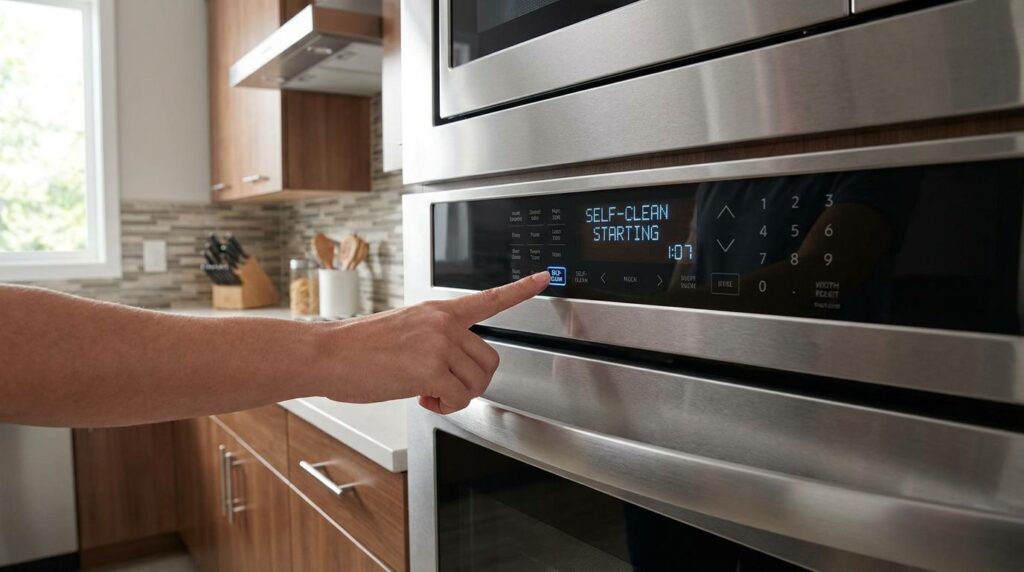
The self-clean function is one of the most convenient features on a modern oven — a button press and a few hours later, the baked-on grease and residue have been reduced to a light ash you can wipe away. So when you press Self-Clean and nothing happens, or the cycle starts but doesn’t complete, it’s genuinely frustrating. The good news is that self-clean malfunctions have a manageable set of causes, most of which don’t require buying a new oven.
This guide explains how the self-clean cycle works, why it might not be functioning, and how to diagnose the issue. If you’re in Coquitlam, Port Coquitlam, or Port Moody, Tricity Repairs can help with any oven repair you need.
How the Self-Clean Cycle Works
The self-clean function heats the oven to extreme temperatures — typically 480°C to 540°C (900°F to 1000°F) — which incinerates food residue and grease, reducing everything to a small amount of ash. For the cycle to run safely, the oven door locks automatically and stays locked until the cavity has cooled to a safe temperature. The entire cycle typically takes 2–4 hours depending on the setting, followed by a cool-down period of 1–2 hours before the door unlocks.
Because of the extreme temperatures involved, several safety mechanisms and components must be working correctly for the self-clean cycle to initiate and complete. If any of them fail, the oven may refuse to start the cycle or abort partway through.
Why the Self-Clean Cycle Might Not Work
1. Door Latch or Lock Mechanism Has Failed
The oven door must lock before the self-clean cycle will start. On most ovens, pressing Self-Clean triggers the door lock motor to engage, and the cycle won’t begin until the lock confirms it’s engaged. If the door lock motor has failed, the latch assembly is jammed, or the lock switch isn’t sending the correct confirmation signal, the cycle simply won’t initiate.
Signs of a door lock problem: you press Self-Clean, the control panel seems to accept it, but after a few minutes the oven returns to standby. On some ovens, you may see a lock indicator light that flashes but never stays solid. The door lock motor is a relatively affordable replacement and is commonly needed on ovens that are several years old.
2. Blown Thermal Fuse
Ovens have thermal fuses as safety devices that blow (permanently open) if the oven exceeds a safe temperature. Ironically, the self-clean cycle runs so hot that it can stress or blow the thermal fuse — particularly if the fuse was already weakened from years of use, or if there was a malfunction during a previous self-clean cycle.
A blown thermal fuse will typically prevent the oven from running at all (not just self-clean), or may allow bake/broil but block the self-clean function specifically. Testing requires a multimeter — the fuse should show continuity when cold. Replacement is straightforward and inexpensive. Many oven repairs after a self-clean attempt come down to a thermal fuse.
3. Temperature Sensor Malfunction
The oven temperature sensor monitors the cavity temperature throughout the self-clean cycle. If the sensor is reading incorrectly (reporting the oven as hotter or cooler than it actually is), the control board may refuse to initiate the cycle, may abort it prematurely as a safety measure, or may fail to complete the cycle properly.
A faulty temperature sensor often affects regular baking too — if your oven has been producing inconsistent results during normal cooking, the sensor may be failing. Testing with a multimeter at room temperature confirms whether it’s functioning within spec. For more on oven temperature issues, see: Oven Temperature Not Accurate? Here’s Why and How to Fix It.
4. Control Board Fault
The main control board manages the self-clean cycle — initiating the door lock, ramping the temperature up, maintaining it for the correct duration, then triggering the cool-down and door unlock. A faulty control board can fail to initiate the cycle, cancel it unexpectedly, or get stuck in a loop.
Control board issues are often preceded by other erratic oven behaviour: display glitches, random error codes, or bake/broil functions that behave inconsistently. If self-clean is the only function not working, the door lock or thermal fuse is more likely the issue than the control board.
5. The Oven Was Recently Cleaned with a Commercial Cleaner
Some oven manufacturers explicitly warn against using commercial oven cleaners like Easy-Off on ovens with self-clean functions, as the chemical residue can damage the oven’s interior coating. If commercial cleaner residue is present in the oven, it can also produce excessive smoke during self-clean, which may trip safety mechanisms. If you’ve recently used a chemical cleaner, wipe the interior thoroughly before attempting a self-clean cycle.
6. Oven Is Too Hot to Start the Cycle
Many ovens require the interior to be below a certain temperature before they’ll initiate the self-clean cycle. If you’ve just finished cooking and the oven is still hot, the control board may delay or refuse to start self-clean until the cavity has cooled sufficiently. Wait an hour after cooking before attempting to start the cycle.
7. Racks Left Inside
Most oven manufacturers instruct you to remove oven racks before running self-clean. The extreme temperatures can discolour, warp, or damage the rack finish. Some ovens detect that racks are inside and will either warn you or refuse to proceed. Always remove racks before self-clean — clean them separately with hot soapy water or a baking soda paste. For a full oven cleaning guide, see: How to Deep Clean Your Oven Without Chemicals.
What to Do If the Cycle Starts but Doesn’t Complete
If the self-clean cycle begins but stops prematurely:
- Power interruption: Any power blip during the cycle can abort it. The door may remain locked until the oven cools — this is normal. Don’t force the door.
- Excessive smoke: A heavily soiled oven produces significant smoke during self-clean. Some ovens have sensors that abort the cycle if smoke is extreme. Wipe out large food pieces before running self-clean.
- Control board or sensor fault: If the cycle consistently stops at the same point, a component is failing and needs professional assessment.
Door Locked After a Failed Self-Clean: What to Do
If the self-clean cycle was interrupted and the door remains locked, do not try to force it open. The oven needs to cool to below approximately 50°C (120°F) before the lock will release. This can take 1–2 hours. If the door remains locked after the oven has fully cooled, try unplugging the oven for 5 minutes to reset the control board — on many models this releases the lock. If the door still won’t open, a technician can manually release the lock mechanism.
When to Call a Professional
If the self-clean cycle consistently fails to start or complete, a technician can test the door lock motor, thermal fuse, temperature sensor, and control board in a single visit. These are all replaceable components, and accurate diagnosis prevents unnecessary part purchases.
Tricity Repairs serves Coquitlam, Port Coquitlam, and Port Moody with expert oven repair. Call us at (604) 359-5952 and we’ll diagnose your self-clean issue quickly. For related oven issues, see: Troubleshooting an Oven with Uneven Baking Results.
Summary
A self-clean cycle that won’t start or complete is most commonly caused by a failed door lock mechanism, a blown thermal fuse, or a faulty temperature sensor. Start by confirming the oven is cool, racks are removed, and there’s no residual chemical cleaner inside. A full power reset sometimes clears control board glitches. For persistent failures, a technician can diagnose the specific component and restore self-clean function efficiently.