A dryer that runs extremely hot — scorching clothes, tripping its own thermal fuse, or shutting off mid-cycle from overheating — is more than just a performance problem. It’s a safety concern. Dryer fires are one of the leading causes of home appliance fires, and overheating is the condition that allows them to start. Understanding what causes a dryer to overheat and addressing it promptly protects both your laundry and your home.
In this guide, we’ll cover every cause of dryer overheating, how to recognize the signs, and what you can do about each one. If you’re in Coquitlam, Port Coquitlam, or Port Moody, Tricity Repairs can diagnose and fix dryer overheating issues fast.
Signs Your Dryer Is Overheating
- Clothes come out extremely hot — too hot to handle immediately
- Clothes are scorched, yellowed, or have a burnt fabric smell
- The dryer shuts off mid-cycle and won’t restart for 30–60 minutes
- The exterior of the dryer feels very hot to the touch
- The laundry room becomes noticeably warm while the dryer runs
- The dryer has blown its thermal fuse more than once
Any of these symptoms warrants investigation before the next load.
Common Causes of Dryer Overheating
1. Blocked or Clogged Exhaust Vent
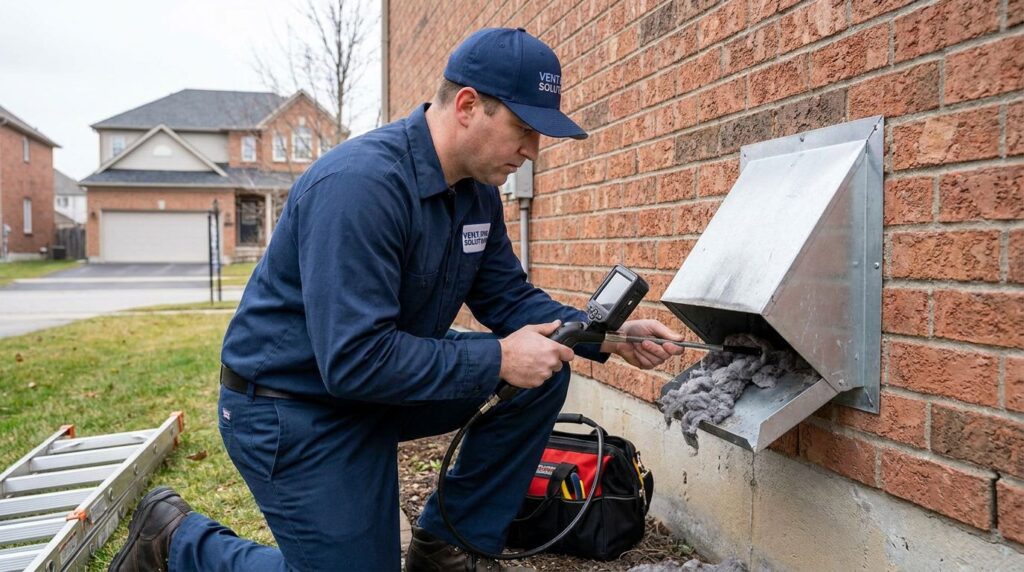
This is the most common — and most dangerous — cause of dryer overheating. The exhaust vent carries hot, moist air out of the dryer and out of the house. When this vent is clogged with lint, a bird’s nest, a kinked duct, or a closed exterior flap, hot air has nowhere to go. It recirculates inside the machine, temperatures climb rapidly, and lint inside the duct or drum can reach ignition temperature.
A clogged vent also dramatically increases drying time — you may notice clothes taking two or even three cycles to dry before overheating becomes apparent. Have your dryer vent professionally cleaned at least once a year. Check the exterior flap while the dryer runs — it should be open and blowing warm air strongly. For more on vent warning signs, see: Warning Signs Your Dryer Vent Is Too Hot.
2. Clogged Lint Trap
A lint trap that hasn’t been cleaned allows lint to restrict airflow through the dryer, causing heat to build up inside the drum. Clean the lint trap before every single load. Also wash the screen with warm soapy water monthly — fabric softener sheet residue forms an invisible film on the mesh that restricts airflow even when the trap looks visually clean.
3. Faulty Cycling Thermostat
The cycling thermostat monitors drum temperature and cycles the heating element on and off to maintain the correct temperature range. When it fails in the closed position, it allows the heating element to run continuously without cycling off — temperatures inside the drum climb well above normal operating range. This is one of the most common causes of a dryer that’s too hot even with good airflow.
Testing requires a multimeter — the cycling thermostat should show continuity at room temperature and open circuit when heated. Replacement is straightforward and the part is inexpensive.
4. Failed High-Limit Thermostat
The high-limit thermostat is a safety device that cuts power to the heating element if temperatures reach a dangerous level. On many models, this thermostat is a one-trip device — once it trips, it needs replacement. But a high-limit thermostat that’s failing without fully opening can allow temperatures to exceed safe levels intermittently before eventually tripping permanently. If your dryer repeatedly blows its thermal fuse, the high-limit thermostat is often the underlying cause.
5. Blown and Replaced Thermal Fuse (Underlying Issue Not Fixed)
The thermal fuse is a one-time safety device that permanently opens when the dryer exceeds a critical temperature. When homeowners replace a blown thermal fuse without addressing the root cause (usually a blocked vent or failed thermostat), the new fuse blows again quickly. A dryer that repeatedly blows thermal fuses has an overheating problem that needs full diagnosis, not just fuse replacement. For more on dryer components, see: Dryer Not Heating: Parts to Check.
6. Heating Element Grounded Against the Housing
If the heating element coil has broken and a section is touching the dryer housing, it can create a partial short that allows the element to run even when the cycling thermostat signals it to stop. This causes the dryer to run hotter than designed. A grounded element is also a potential electrical hazard. This is usually diagnosed visually — a broken, sagging coil touching the element housing is visible when you access the heating element.
7. Restricted Airflow from Duct Length or Configuration
Even a clean vent can restrict airflow if it’s too long, has too many 90° bends, or uses flexible plastic duct that has partially collapsed inside. The maximum recommended length for a dryer vent is typically 7–8 metres (25 feet) with straight rigid metal duct, reduced by about 1.5m for each 90° elbow. If your installation exceeds this, the dryer works against restricted airflow and overheats even with a clean duct.
What Overheating Does to Your Clothes
Beyond the fire risk, an overheating dryer damages fabrics. High heat breaks down elastic fibres in activewear and underwear, causes synthetic fabrics to pill and shrink, and can permanently set wrinkles into cotton items. If clothes have been coming out unusually stiff, shrunken, or with a faint burnt smell, the dryer has likely been running too hot for some time.
Step-by-Step: What to Do If Your Dryer Overheats
- Stop using the dryer immediately until the cause is identified.
- Clean the lint trap and wash the screen.
- Check the exterior vent flap — is it open during operation? Is airflow strong?
- Inspect the duct for kinks — pull the dryer away from the wall and check the duct run.
- Have the vent professionally cleaned if it hasn’t been done in over a year.
- If the vent is clear and the dryer still overheats, the cycling thermostat or heating element needs testing.
For comprehensive dryer maintenance advice, see: How to Maintain Your Dryer and Prevent Fire Hazards.
When to Call a Professional
If cleaning the vent and lint trap doesn’t resolve the overheating, component-level diagnosis is needed — cycling thermostat, high-limit thermostat, heating element, and thermal fuse all need to be tested in sequence. A technician can work through this systematically and replace the faulty component in a single visit.
Tricity Repairs serves Coquitlam, Port Coquitlam, and Port Moody with fast dryer repair. Call us at (604) 359-5952 — we take overheating dryers seriously and will diagnose the root cause, not just replace the thermal fuse.
Summary
Dryer overheating is almost always caused by a blocked exhaust vent, a clogged lint trap, or a failed cycling thermostat. The vent is the first thing to check and clean — it’s the cause in the majority of cases. If airflow is good but the dryer still overheats, the heating element control components need testing. Never ignore an overheating dryer — it’s one of the most preventable causes of home appliance fires.