Your dryer is running, the drum is spinning, clothes are tumbling — but after a full cycle, everything comes out just as wet as it went in. Sound familiar? The most common culprit behind a dryer that runs but doesn’t heat is a failing or failed heating element. Understanding the warning signs before the element gives out completely can save you from a mountain of damp laundry and help you get the repair done before it turns into a bigger problem.
This guide from Tri-City Repairs — serving Coquitlam, Port Coquitlam, and Port Moody — walks you through everything you need to know about dryer heating elements: what they do, how they fail, and what you can do about it.
What Does the Heating Element Do?
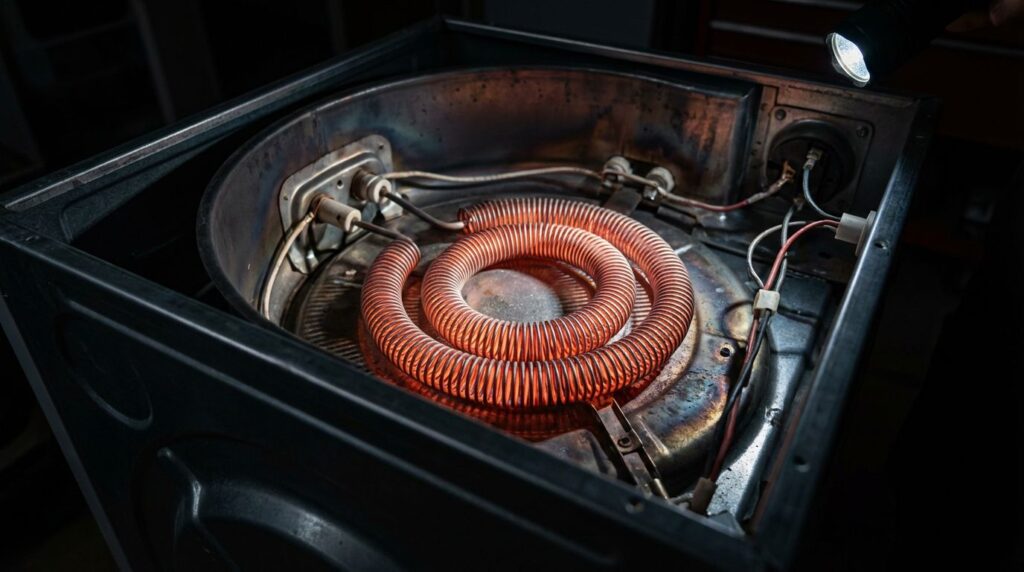
In an electric dryer, the heating element is a coil of resistance wire — similar in concept to a toaster element — that heats the air flowing through the drum. As the element heats up, a blower fan pushes that warm air through the tumbling drum, evaporating moisture from your clothes. A properly functioning element heats the air to between 125°F and 135°F (about 52–57°C) for most cycles.
Note: Gas dryers use a gas burner assembly instead of an electric heating element, so the symptoms and repairs are different. This guide focuses on electric dryers.
Warning Signs Your Heating Element Is Failing
1. Dryer Runs But Produces No Heat
This is the most definitive sign that the heating element has completely failed. The drum spins normally and the dryer goes through its full cycle time, but the air inside never gets warm. Touch the clothes or reach inside the drum during the cycle (carefully — only when safe to do so) — if the air is room temperature, the element is almost certainly the issue.
However, before replacing the element, rule out a few other causes: a tripped circuit breaker (electric dryers use two legs of power — one can trip leaving the other running), a blown thermal fuse, or a failed thermostat. These are all quick checks that can save you the cost of an unnecessary part.
2. Dryer Takes Multiple Cycles to Dry a Normal Load
A heating element doesn’t always fail all at once. Sometimes the wire coil develops a partial break — a hot spot where current still flows through a narrow point. In this state, the element produces some heat, but not enough to dry clothes efficiently. You may notice it takes two, three, or even four cycles to dry what used to take one.
This symptom is particularly tricky because it can also be caused by a clogged vent or a restricted lint trap — both far simpler problems. Always check those first. If the venting is clear and the problem persists, the element is the next thing to investigate.
Our post on How to Prevent Lint Buildup in Your Dryer for Safe Operation has a thorough guide to checking and maintaining your vent system — a clogged vent is the most common reason dryers underperform.
3. Dryer Overheating and Shutting Off Prematurely
Ironically, a failing heating element can sometimes cause overheating rather than under-heating. If the element develops a ground fault — where part of the coil contacts the dryer cabinet or housing — it can generate heat in an uncontrolled way. The dryer’s thermal safety devices (thermal fuse and high-limit thermostat) detect the excessive temperature and shut the machine off to prevent a fire.
If your dryer frequently stops mid-cycle with clothes that feel too hot to touch, this is a warning sign that shouldn’t be ignored. A dryer that’s repeatedly overheating is a fire hazard. Have it inspected by a professional promptly.
4. Burning Smell During Operation
A musty or burning smell coming from your dryer during operation can have several causes — lint buildup is common — but a burning plastic or metallic smell specifically can indicate that part of the heating element or its housing is overheating and beginning to melt or burn. This is a clear sign to stop the dryer immediately and have it inspected.
5. Visible Damage to the Element
If you have access to your dryer’s heating element (typically found behind a back panel on most models), you may be able to see the damage directly. A failed element will often show one or more of the following:
- A visible break or gap in the coil wire
- Discoloration or scorching at one point on the coil
- Sagging or deformed coil sections
- Carbon deposits around a break point
A continuous, unbroken coil that glows evenly is a healthy element. Any break in continuity means no heat (or partial heat). You can also test the element with a multimeter set to the continuity or resistance setting — a healthy element will show a reading; a failed element will show no continuity.
What Causes a Heating Element to Fail?
Understanding why heating elements fail can help you avoid premature failure in the future:
- Age and normal wear: Heating elements have a finite lifespan — typically 8–12 years in regular use. As the coil wire heats and cools thousands of times over its life, it becomes brittle and eventually cracks.
- Restricted airflow: When the dryer vent is clogged, hot air can’t exit efficiently. This causes the element to run hotter than designed, dramatically shortening its life.
- Overloading: Stuffing too much laundry into the dryer extends cycle times, keeping the element active longer per cycle than it’s designed for.
- Mineral or residue buildup on the coil: Hard water, fabric softener residue, and detergent carried on clothes can deposit on the heating element over time, creating hot spots. The Effects of Mineral Buildup on Your Appliance Performance explains this in more detail and applies to dryers as well as other appliances.
Can You Replace a Dryer Heating Element Yourself?
On many dryer models, the heating element is accessible without highly specialized tools, and the part itself is relatively inexpensive (typically $30–$80 for most residential dryers). If you’re comfortable with basic appliance work — disconnecting power, removing panels, using a multimeter — this is a repair many mechanically inclined homeowners can handle themselves.
That said, there are good reasons to call a professional:
- Some dryer designs require significant disassembly to reach the element.
- If you’re not certain the element is the root cause, replacing it won’t fix the problem.
- Dryers involve electrical components where mistakes can be dangerous.
- A technician can inspect the thermostat, thermal fuse, and wiring at the same time, catching related issues before they cause the new element to fail prematurely.
Our guide on DIY vs Professional Appliance Repair: When to Call the Experts can help you decide which approach makes sense for your situation.
Related Components That Often Fail Alongside the Heating Element
When a technician replaces a dryer heating element, they’ll typically also inspect or recommend replacing:
- Thermal fuse: A one-time safety device that blows if the dryer overheats. If the element failed due to overheating, the thermal fuse is almost certainly blown too.
- High-limit thermostat: Regulates maximum temperature. Can be damaged by the same overheating event that failed the element.
- Cycling thermostat: Controls the on/off cycling of the element during normal operation. Failure here can cause the element to run continuously or not at all.
When to Call Tri-City Repairs
If your dryer is running but not heating, or you’ve noticed any of the warning signs above, Tri-City Repairs can diagnose and fix the problem quickly. We service electric dryers for all major brands throughout Coquitlam, Port Coquitlam, and Port Moody.
Don’t put up with wet laundry or run the dryer multiple times per load — that wastes electricity and accelerates wear on the machine. Call us at (604) 359-5952 or visit tricityrepairs.ca to schedule a service call.
Final Checklist: Is It Your Heating Element?
- Dryer runs but produces no or little heat ✓
- Vent and lint trap are clear ✓
- Circuit breaker hasn’t tripped ✓
- Thermal fuse tested and intact ✓
- Element coil visibly broken or shows no continuity ✓
If all five apply, you’ve got a failed heating element. Time for a repair.