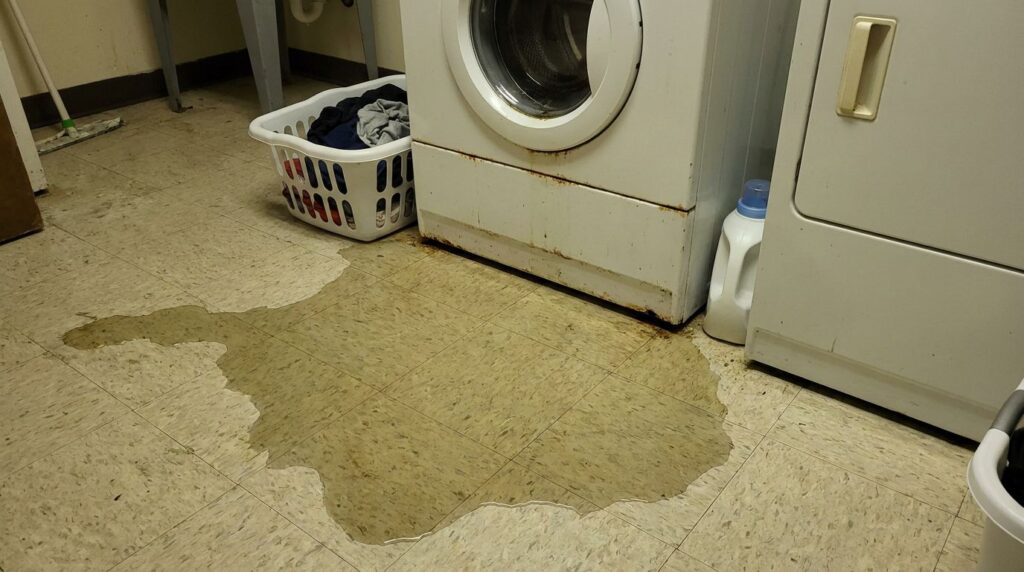
Finding a puddle of water under your washing machine is one of those household problems that demands immediate attention — water damage to floors and subflooring can be costly, and leaks have a way of getting worse rather than better. But before you panic, it’s worth knowing that most washing machine leaks from the bottom have identifiable causes, and many are fixable without professional help.
This guide covers every reason a washing machine might leak from the bottom, how to identify which component is the source, and what repairs are involved. Tricity Repairs serves Coquitlam, Port Coquitlam, and Port Moody for all washing machine repairs.
First Step: Identify When the Leak Occurs
Noting when the leak happens significantly narrows the source:
- During fill: Inlet hose connections, inlet valve, or tub seal
- During wash/agitation: Door boot seal (front-loaders), tub seal, pump, or overfilling
- During drain: Drain hose, pump, pump filter housing
- During spin: Tub seal, pump, or hose that’s loose under vibration
- After the cycle ends: Residual drain hose drip, pump seal
Common Causes of Bottom Leaks
1. Leaking Drain Pump or Pump Seal
The drain pump sits at the bottom of the washing machine and is one of the most common sources of bottom leaks. The pump can leak from its housing (a crack in the plastic), from the seal where the pump shaft exits (a worn seal), or from the hose connections to and from the pump. On front-loaders, the pump filter housing (the accessible compartment at the lower front) can also leak if the filter cap isn’t fully tightened after cleaning.
If your front-load washer leaks during drain cycles and you’ve recently cleaned the filter, check that the filter cap is hand-tight. A loose cap is a very common cause of post-filter-cleaning leaks.
2. Worn Door Boot Seal (Front-Loaders)
The rubber door boot seal creates the watertight barrier between the door and the tub on front-load washers. Over time, the seal can develop tears, holes, or deformations that allow water to escape during the wash cycle. Water from a door seal leak typically runs down the inside of the door and drips from the bottom front of the machine.
Inspect the seal carefully by running your hands around its full interior surface, paying attention to the lower portion where water pools during a cycle. Small holes may not be visible by sight — run your wet fingers around the seal and feel for any roughness or thin spots. A torn door boot seal needs replacement, which involves removing the door and sometimes the front panel.
3. Leaking Inlet Hoses
The hot and cold water supply hoses that connect to the back of the machine can leak at the connections (where they thread into the inlet valve or the supply valves) or along the hose length if they’ve cracked or developed pinholes. Hose leaks during fill present as water running down the back of the machine and pooling at the base.
Check connections at both ends of each hose. Hand-tighten (plus a quarter turn with pliers) any connections that feel loose. Replace any hose showing cracking, bulging, or age — rubber hoses should be replaced every 5 years. For more on preventing water damage, see: How to Prevent Washing Machine Flooding.
4. Leaking Internal Hoses
Inside the washing machine, multiple rubber hoses connect the inlet valve to the tub, the tub to the pump, and the pump to the drain hose. Any of these can develop cracks or loose clamp connections over time, leaking during fill or drain cycles. These internal hoses are accessible once the cabinet is opened — a technician can inspect and replace them as needed.
5. Worn or Failed Tub Seal
The tub seal (also called the outer tub seal or bearing seal on front-loaders) prevents water from leaking out around the drum shaft where it exits the outer tub. When this seal wears out — often accompanied by failing drum bearings — water leaks during any phase of the cycle and typically shows up as a consistent drip or puddle under the machine. A failed tub seal on a front-loader is a significant repair, as it involves disassembling the entire drum assembly.
6. Overfilling Due to Faulty Pressure Switch
If the water level sensor (pressure switch) is failing and allows the machine to overfill, water overflows the tub and drips from the bottom of the cabinet. This presents as a leak that gets progressively worse during the fill phase, often accompanied by water overflowing from the detergent drawer on front-loaders. For more on pressure switch issues, see: Washing Machine Stops Mid-Cycle: Causes and Quick Fixes.
7. Clogged or Overflowing Drain Hose
If the drain hose is pushed too far into the standpipe (creating a siphon), or if the standpipe itself is partially clogged, water can back up and overflow from the drain connection — dripping down the back or bottom of the machine. Ensure the drain hose is inserted only 15–20cm (6–8 inches) into the standpipe and is not kinked or blocked.
8. Too Much Detergent
Excess suds — particularly common in HE machines when non-HE detergent is used — can overflow the tub and leak from the bottom or the door seal area. If you notice the leak is soapy and happens primarily during the wash cycle, reduce detergent quantity significantly or switch to HE-rated detergent.
How to Find the Leak Source
- Dry the area thoroughly and run a short cycle while watching closely.
- Note exactly when water appears — during fill, wash, drain, or spin.
- Check the filter cap on front-loaders — ensure it’s fully tightened.
- Inspect inlet hose connections at both ends for moisture or mineral buildup.
- Check the door boot seal interior for tears or holes.
- Watch the drain hose connection at the back during drain cycles.
For more on washing machine maintenance, see: How to Maintain Your Washing Machine.
When to Call a Professional
Internal hose leaks, pump seal leaks, and tub seal failures all require cabinet access and some disassembly. Tricity Repairs serves Coquitlam, Port Coquitlam, and Port Moody with washing machine repair. Call us at (604) 359-5952 — we’ll identify the leak source accurately and fix it before it causes floor damage.
Summary
Washing machine leaks from the bottom are most commonly caused by a loose drain pump filter cap, a torn door boot seal, leaking inlet hoses, or internal hose connections. Noting when the leak occurs (fill, wash, drain, or spin) points directly to the source. Check the simple external causes first — filter cap, inlet hose connections, drain hose position — before assuming an internal component has failed.