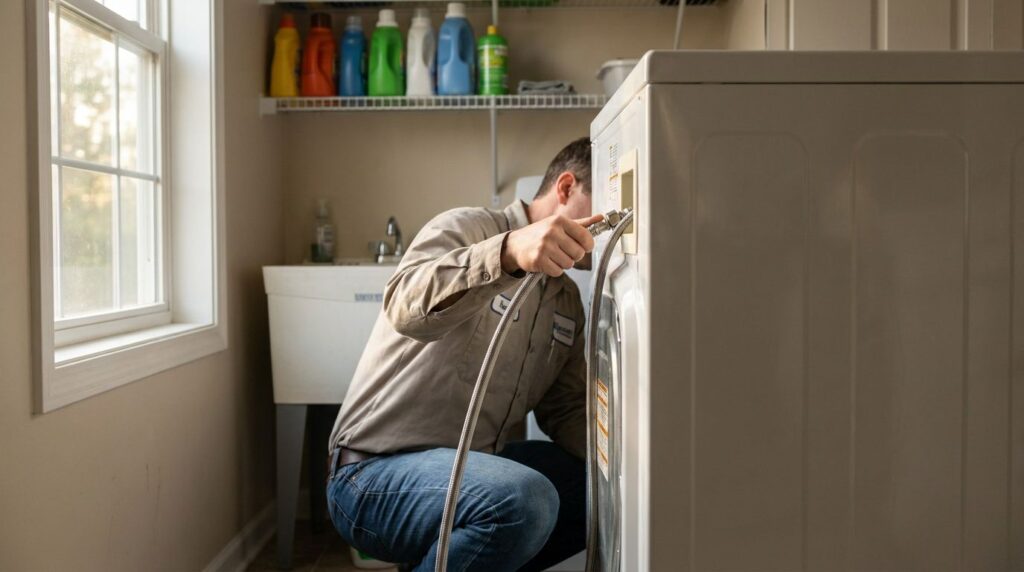
You’ve started a wash cycle and walked away, only to come back 20 minutes later and find the machine is still filling with water. Or the cycle takes much longer than usual, and you can hear a faint trickle rather than the normal rush of water entering the drum. A washing machine that fills slowly is a common problem — and fortunately, it’s usually one with a clear cause and a straightforward fix.
In this guide, we’ll cover all the reasons your washing machine might be filling slowly, how to troubleshoot each cause, and when it’s time to call a professional. If you’re in Coquitlam, Port Coquitlam, or Port Moody, Tricity Repairs is ready to help.
How the Water Fill System Works
When you start a wash cycle, the washing machine opens its water inlet valve (or valves — most machines have separate hot and cold) to allow water in. The water flows through inlet hoses, through a mesh filter screen, and into the drum. A water level sensor (pressure switch) monitors how full the tub is and signals the control board to close the inlet valve once the right level is reached.
For this system to work properly, you need adequate water pressure at the source, clean unobstructed hoses and filters, and a functioning inlet valve. Problems with any of these will result in slow filling or no filling at all.
Common Reasons a Washing Machine Fills Slowly
1. Clogged Inlet Valve Filter Screens
This is by far the most common cause of slow filling — and the easiest to fix. Where your hot and cold inlet hoses connect to the back of the washing machine, there are small mesh screens inside the valve ports designed to catch sediment and debris from the water supply. Over time, mineral deposits, rust particles, and debris accumulate on these screens, restricting water flow to a trickle.
To check and clean them:
- Turn off the hot and cold water supply valves behind the machine.
- Unscrew both inlet hoses from the back of the washer.
- Look inside the valve ports — you’ll see small mesh screens.
- Gently pull them out with needle-nose pliers.
- Rinse under running water or soak in white vinegar to dissolve mineral scale.
- Reinstall and reconnect the hoses.
In many cases, this alone resolves the slow fill completely. It’s worth doing this as regular maintenance every year or two, especially in areas with hard water.
2. Low Water Pressure in the Home
Washing machines require a minimum water pressure — typically around 20 PSI — to fill at normal speed. If your home’s water pressure is below this threshold (common in older homes, upper floors, or during high-demand periods), the machine will fill slowly regardless of the condition of its components.
Test this by turning on a tap near the washer and observing the flow. If pressure seems low throughout your home, check whether other appliances and fixtures are also experiencing low pressure. The issue may be with your home’s main supply line, a partially closed shut-off valve, or your municipal supply during peak hours.
Also check the shut-off valves directly behind the washing machine — they should be fully open (turned counterclockwise as far as they go). A valve that’s only partially open significantly restricts flow.
3. Kinked or Pinched Inlet Hoses
If the washing machine has been pushed too close to the wall, the rubber inlet hoses running from the water supply to the back of the machine can become kinked or pinched — restricting flow. This is especially common after moving the machine for cleaning or repairs.
Pull the machine away from the wall and check both hoses along their full length. They should have a gentle curve with no sharp bends. Replace any hose that has visible kinks, bulges, or wear — rubber hoses should be replaced every 5 years regardless, as they can split and cause flooding. For more on preventing water damage, see: How to Prevent Washing Machine Flooding.
4. Faulty Water Inlet Valve
The water inlet valve is an electromechanical component that opens and closes on command from the control board. Over time, the solenoid coils inside the valve can weaken or fail, causing the valve to open only partially — resulting in a slow trickle of water rather than a full flow.
Signs of a failing inlet valve include water filling very slowly even with good pressure and clean screens, or one temperature (hot or cold) filling normally while the other barely flows. The valve can be tested with a multimeter — a failed solenoid coil will show either no continuity or a resistance reading far outside the specified range for your model.
Inlet valve replacement is a straightforward repair for most washing machine models and is one of the more common fixes our technicians perform.
5. Issues with the Water Level Sensor (Pressure Switch)
The pressure switch tells the machine when the tub has reached the right water level. If this switch is malfunctioning, it might signal “full” too early — causing the machine to stop filling prematurely and appear to have filled slowly (because the drum isn’t as full as it should be). Alternatively, a blocked pressure tube (the small hose connecting the switch to the tub) can cause incorrect readings.
If your machine fills to an unusually low level and then proceeds with the cycle, the pressure switch or its hose is worth investigating.
6. Only One Temperature Is Flowing
Some cycle settings require both hot and cold water valves to open simultaneously. If one inlet valve has failed, only one temperature fills the machine — making the fill rate roughly half of normal. You might also notice the water temperature being off (washing in cold when you selected warm, for example).
Running a “warm” wash and checking whether the water actually feels warm at the beginning of the cycle can help identify this.
Step-by-Step Troubleshooting
- Check the shut-off valves — make sure both hot and cold are fully open.
- Pull the machine from the wall — check for kinked hoses.
- Clean the inlet screens — unscrew hoses, remove screens, rinse thoroughly.
- Test water pressure at a nearby tap — is flow strong elsewhere in the home?
- Time the fill — a normal load should fill within 2–4 minutes on most machines. Much longer than that points to a restriction.
- Note which temperature is slow — if only hot or only cold is slow, the corresponding inlet valve solenoid may be failing.
For related washing machine issues, see: Signs Your Washing Machine Needs Repair.
Can Slow Filling Damage the Machine?
Yes, over time. Many modern washing machines have a fill timeout — if the machine takes too long to fill, it will abort the cycle and display an error code. Repeated timeouts can cause the control board to log faults. More importantly, if the machine fills to a lower level than intended, the wash quality suffers and components like the drum bearing may experience unusual wear from an imbalanced load.
Addressing a slow fill promptly is worth it both for appliance longevity and for actually clean laundry.
When to Call a Professional
If cleaning the inlet screens didn’t solve the problem, and you’ve confirmed pressure is adequate and hoses are clear, the inlet valve or pressure switch likely needs replacement. These repairs require disconnecting water supply and some disassembly of the machine — manageable for confident DIYers but faster and safer with a professional.
Tricity Repairs serves Coquitlam, Port Coquitlam, and Port Moody with washing machine repair. We diagnose accurately and carry parts for all major brands. Call us at (604) 359-5952 and we’ll have your machine filling at full speed again quickly. For more common washer issues, see: How to Get Rid of Washing Machine Odour.
Summary
A washing machine that fills slowly is most often caused by clogged inlet valve filter screens — a quick, free fix you can do yourself. Beyond that, low water pressure, kinked hoses, and a failing inlet valve are the next most likely causes. Work through the checklist systematically: check valves, clear screens, inspect hoses. If the issue persists, a technician can test the inlet valve and pressure switch and get your machine back to full performance.