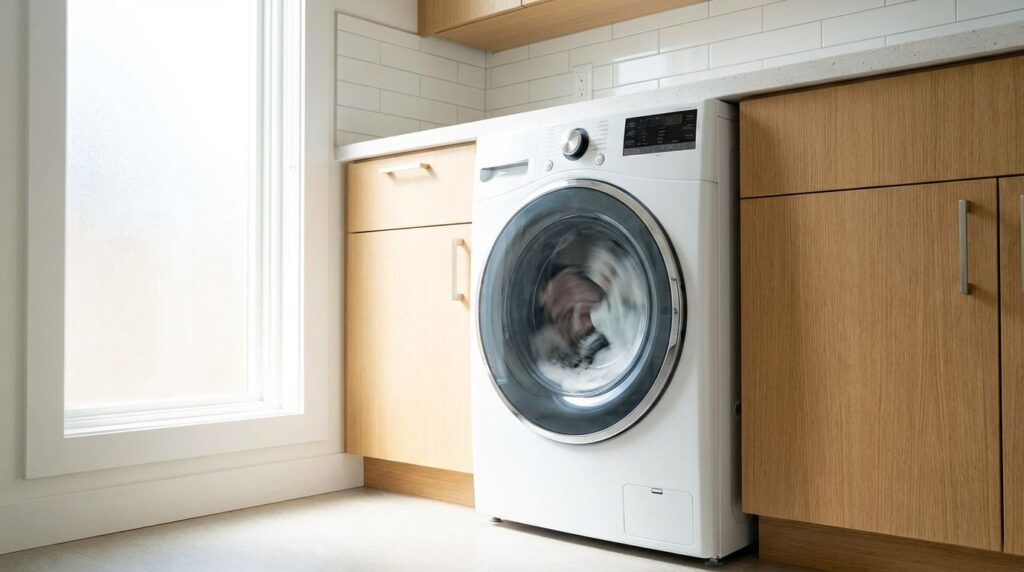
A washing machine that shakes, bangs, and rattles its way through the spin cycle is more than just an annoying noise problem — it’s a machine that’s under unnecessary stress and, if left unchecked, can damage itself, your flooring, and even the surrounding cabinetry. If your washer has started sounding like it’s trying to break out of the laundry room, this guide is for you.
At Tri-City Repairs, our technicians across Coquitlam, Port Coquitlam, and Port Moody deal with this problem regularly. The good news: most causes of violent shaking during the spin cycle are identifiable and fixable. Here’s what you need to know.
Why Is the Spin Cycle the Problem Point?
During the spin cycle, your washing machine’s drum rotates at high speed — often between 800 and 1400 RPM depending on the model. At those speeds, even small imbalances or mechanical issues become amplified dramatically. What feels like a slight wobble at low speed becomes violent shaking at full spin speed. That’s why problems that were never noticeable during wash or rinse cycles suddenly become impossible to ignore during spin.
The Most Common Causes of a Violently Shaking Washer
1. Unbalanced Load
This is the single most common cause of a shaking washing machine, and it’s entirely fixable without any tools at all. When heavy items like jeans, towels, or bedding clump together on one side of the drum, the load becomes unbalanced. At spin speed, that uneven weight distribution creates vibration that shakes the whole machine.
What to do: Pause the cycle, open the lid or door, and redistribute the clothes manually so they’re spread evenly around the drum. Restart the spin. Most modern washing machines also have an automatic rebalancing function that will attempt this on its own — but manual redistribution works better for heavy, tangled loads.
Prevention tip: Wash heavy items like comforters or jeans with other similar-weight items to balance the load from the start. Avoid washing a single large item by itself.
2. Machine Not Level
A washing machine sitting on uneven feet is a machine that will shake — guaranteed. All four feet need to make firm contact with the floor, and the machine needs to be level both front-to-back and side-to-side. Even a small tilt of a few millimetres can create significant vibration at spin speeds.
What to do: Place a level on top of the machine. Check in both directions. Most washing machines have adjustable front feet that you can turn by hand or with a wrench. Rear feet on many machines adjust automatically when you tilt the machine forward slightly and then set it back down. After adjusting, try shaking the machine by hand from the corners — all four feet should feel firm on the floor with no rocking.
3. Worn or Broken Drum Bearings
The drum in your washing machine spins on bearings, just like a wheel on an axle. Over time — especially in machines that have been used for five or more years — those bearings wear down. When they do, the drum starts to wobble on its axis, causing noise and vibration during spin that gets progressively worse.
Signs of bad bearings: A loud rumbling, grinding, or roaring noise that increases with spin speed. You may also notice the drum has some play in it when you push it side-to-side with the door open. A burnt rubber or metallic smell can also indicate bearing wear.
Bearing replacement is a significant repair that involves partial disassembly of the machine. Depending on the age and make of your washer, it may be more cost-effective to repair or replace — our guide on DIY vs Professional Appliance Repair: When to Call the Experts can help you think through that decision.
4. Damaged or Worn Shock Absorbers
Front-load washing machines use shock absorbers (also called dampers or struts) to cushion the movement of the drum during spin. Top-load machines use suspension rods for the same purpose. When these components wear out or get damaged, the drum loses its damping and starts to bounce and vibrate violently.
Signs of bad shock absorbers: The machine moves excessively even during gentle agitation phases. The drum visibly bangs against the tub cabinet during spin. There may be a thumping sound in addition to the vibration.
This is a repair that requires access to internal components and should be done by a technician if you’re not comfortable with appliance disassembly.
5. Worn Drive Belt
Some washing machine models use a drive belt to connect the motor to the drum. A worn, cracked, or slipping belt doesn’t transfer power smoothly, which can cause an uneven spin and vibration. You may also notice the drum spinning inconsistently or slower than it should.
What to listen for: A slapping or squealing noise during the spin cycle, or a drum that seems to hesitate or surge in speed, can both point to a belt issue.
6. Debris Trapped in the Drum or Pump
Coins, hairpins, bra underwires, and other small items that escape from pockets or laundry bags can become trapped in the drum gaps or in the pump filter. During spin, these objects create imbalance and can produce loud banging sounds as they bounce around inside the machine.
What to do: Check the drum interior carefully. Most front-load washers also have an accessible pump filter at the bottom front — check your manual for its location and clean it regularly. Many machines have a removable pump cover that reveals a trap where foreign objects accumulate. This is a quick maintenance task that can solve the problem immediately.
7. Shipping Bolts Still Installed
This one catches a surprising number of homeowners. Washing machines are shipped with transit bolts (also called shipping bolts) installed to lock the drum in place during transport. If these aren’t removed before first use, the machine will shake violently from day one. Check your manual for their location — typically at the back of the machine.
Is Your Washer Also Having Other Issues?
A machine that shakes badly during spin is often a machine that’s working too hard overall. If you’ve noticed other issues alongside the shaking — such as the machine taking longer to complete cycles, not filling properly, or stopping mid-cycle — these may be related. Our post on Why Your Washing Machine Fills Slowly and How to Fix It covers water inlet issues that can sometimes compound spin cycle problems.
Similarly, if your washer has been skipping phases of its cycle, that’s worth addressing separately — see How to Troubleshoot a Washer That Skips the Rinse Cycle for a detailed breakdown.
Step-by-Step: What to Check First
If your machine is shaking violently, here’s the order in which to check things:
- Redistribute the load — stop the cycle, rearrange the laundry, restart.
- Level the machine — check with a spirit level, adjust the feet.
- Check for foreign objects — inspect the drum and clean the pump filter.
- Check that shipping bolts are removed — especially on a new machine.
- Listen carefully to the noise — grinding/roaring = bearings; banging = impact objects or imbalance; slapping = belt.
- Contact a technician — if steps 1–5 don’t resolve it.
The Risk of Ignoring a Shaking Washing Machine
It might be tempting to put up with the noise and vibration if the machine is still technically cleaning clothes. But the consequences of ignoring it can be significant:
- The machine “walks” across the floor and can damage flooring, walls, or neighbouring appliances.
- Water connections can be stressed and begin to leak.
- Internal components — bearings, springs, shock absorbers — suffer accelerated wear.
- In worst-case scenarios, a violently shaking machine can disconnect from its drain hose and cause flooding.
When to Call Tri-City Repairs
If you’ve balanced the load, levelled the machine, checked for debris, and the shaking continues — it’s time to call a professional. Our technicians at Tri-City Repairs diagnose washing machine vibration issues throughout Coquitlam, Port Coquitlam, and Port Moody. We stock common parts and aim to fix the problem in a single visit.
Call us at (604) 359-5952 or book online at tricityrepairs.ca. Don’t let a shaking washer turn into a bigger, more expensive problem.
Summary
A washing machine shaking violently during the spin cycle is almost always traceable to one of a handful of causes: an unbalanced load, an unlevel machine, worn bearings or shock absorbers, a belt issue, or trapped debris. Most homeowners can resolve the first three themselves. If the shaking persists after checking those basics, a qualified technician can diagnose and fix the remaining causes quickly and affordably.