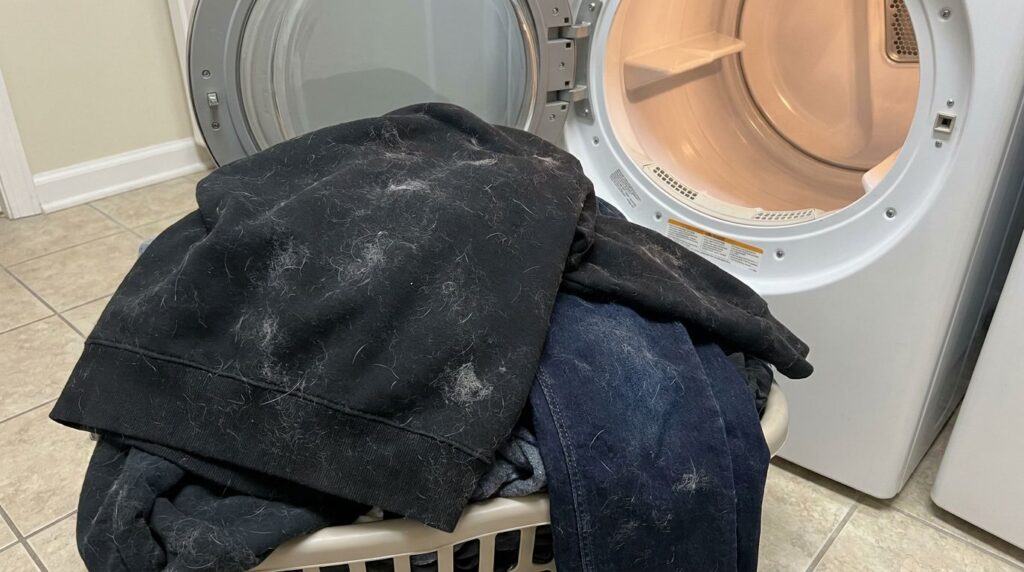
You pull your laundry out of the dryer and instead of clean, dry clothes, you find them covered in lint — white fibres on dark items, dark fuzz on light ones, or a general coating of fluff that takes forever to pick off. A dryer that deposits lint on clothing rather than collecting it is usually a sign of something that’s gone wrong in the airflow or filtration system. Understanding why lint ends up on your clothes instead of in the trap points directly to the solution.
This guide covers all the reasons a dryer might be leaving lint on clothes, how to troubleshoot each one, and how to prevent it going forward. If you’re in Coquitlam, Port Coquitlam, or Port Moody, Tricity Repairs can help with any dryer issues.
How Lint Collection Is Supposed to Work
As the drum tumbles clothing, loose fibres are released. The dryer’s exhaust system creates airflow that carries these fibres toward the lint trap (filter screen), where they’re captured. The filtered air then continues through the exhaust vent and out of the house. When this system works correctly, lint accumulates on the trap screen and clothes come out clean.
When lint ends up back on your clothes instead, something in this airflow and filtration system has been disrupted.
Common Reasons Lint Gets on Clothes
1. Clogged or Full Lint Trap
The most common cause of lint on clothes is a lint trap that’s overloaded. When the screen is so clogged with lint that air can barely pass through it, airflow backs up in the drum — and the lint that would normally travel to the trap instead gets recirculated back onto clothes.
Clean the lint trap before every single load — not occasionally, every time. It takes five seconds and makes a significant difference in both lint collection and drying efficiency. Also periodically wash the lint screen with warm soapy water and a soft brush to remove the invisible film left by fabric softener sheets, which can reduce airflow even when the trap looks clean.
2. Blocked or Restricted Exhaust Vent
A partially blocked dryer vent reduces the airflow that carries lint toward the trap and out of the machine. When airflow drops, the air inside the drum becomes stagnant and lint-laden — and that lint settles back onto your clothes. A blocked vent also causes clothes to take longer to dry and the dryer to overheat.
Check the exterior vent flap while the dryer runs — it should be open and you should feel warm air flowing strongly. If airflow seems weak or the flap barely opens, the vent needs cleaning. Dryer vents should be professionally cleaned at least once a year. For more on vent maintenance, see: How to Maintain Your Dryer and Prevent Fire Hazards.
3. Damaged or Incorrectly Seated Lint Trap
If the lint trap screen has a tear, hole, or isn’t seated correctly in its housing, lint bypasses the filter entirely and is recirculated through the drum. Even a small hole in the screen allows lint to pass through and deposit on clothes.
Remove the lint trap and hold it up to the light — you should see an even, unbroken mesh. Any holes or tears mean replacement is needed. Also ensure the screen sits flush and fully in its slot with no gaps around the edges. Lint traps are inexpensive parts available for all major dryer brands.
4. Overloading the Dryer
An overloaded drum can’t tumble clothes freely, so items clump together and lint can’t travel to the filter efficiently. The packed load creates areas of poor airflow within the drum, and lint settles into fabric folds instead of being carried away. Dry large loads in two smaller batches to allow proper tumbling and airflow.
5. Washing Certain Fabric Types Together
Some fabrics shed significantly more lint than others — terry towels, fleece, chenille, and new cotton items are the biggest producers. When these are washed and dried with dark synthetics (polyester, nylon, microfibre), the lint from the heavy shedders deposits on the lint-attracting synthetic fabrics. The dryer isn’t malfunctioning — it’s just that lint-heavy fabrics and lint-attracting fabrics don’t mix well.
Separate your laundry by lint behaviour: wash towels and fleece items together, and wash synthetic fabrics separately. This dramatically reduces lint transfer regardless of the dryer’s condition.
6. Fabric Softener Sheet Residue
Fabric softener sheets work by depositing a waxy softening agent on fabric surfaces during drying. When sheets are overused or the dryer runs multiple back-to-back cycles with sheets, this waxy residue can build up on the drum interior and the lint screen. The residue can cause lint to stick to the drum walls and then transfer back to clothing in subsequent cycles.
Periodically wipe down the inside of the drum with a damp cloth to remove softener residue. Clean the lint screen with soapy water monthly. Consider switching to liquid fabric softener added to the wash cycle, or dryer balls, which soften clothes without leaving waxy deposits.
7. Static Electricity Attracting Lint
Static buildup in the dryer — common in winter or in very dry climates — causes clothes to attract lint and pet hair electrostatically. Synthetic fabrics are particularly prone to static and lint attraction when dried at high heat.
Reducing heat settings, using dryer balls, or adding a fabric softener sheet specifically for static control helps significantly. Removing clothes from the dryer before they’re completely bone-dry (while still slightly warm) also reduces static buildup.
8. Lint Coming from a Specific Garment
Sometimes the source isn’t the dryer at all — a new garment, a worn item shedding heavily, or a fleece item releasing excessive fibres is coating everything in the load. Identify if the lint has a consistent colour or texture that matches a specific item, and wash that item separately or inside out until it stops shedding heavily.
Quick Checklist to Stop Lint on Clothes
- Clean the lint trap before every load.
- Wash the lint screen with soap and water monthly.
- Inspect the screen for holes or tears — replace if damaged.
- Have the dryer vent cleaned annually.
- Avoid overloading — dry in smaller batches.
- Separate lint-shedding fabrics (towels, fleece) from lint-attracting synthetics.
- Wipe the drum interior monthly to remove softener residue.
For more dryer maintenance tips, see: Warning Signs Your Dryer Vent Is Too Hot.
When to Call a Professional
If you’ve replaced the lint screen, cleaned the vent, and corrected your loading habits but still have a lint problem, there may be a gap or crack in the internal ductwork inside the dryer that’s allowing lint to bypass the filter entirely. A technician can inspect the internal airflow path and identify any leaks or blockages that aren’t accessible without disassembly.
Tricity Repairs serves Coquitlam, Port Coquitlam, and Port Moody with professional dryer repair and maintenance. Call us at (604) 359-5952 for a quick diagnosis. For more on dryer components, see: Signs Your Dryer Belt Is Worn Out.
Summary
Lint on clothes after drying is almost always caused by a clogged or damaged lint trap, a blocked exhaust vent, or mixing lint-shedding fabrics with lint-attracting synthetics. The fix is usually free: clean the trap before every load, inspect it for damage, separate laundry by fabric type, and have the vent cleaned annually. These simple habits keep lint where it belongs — in the trap, not on your clothes.