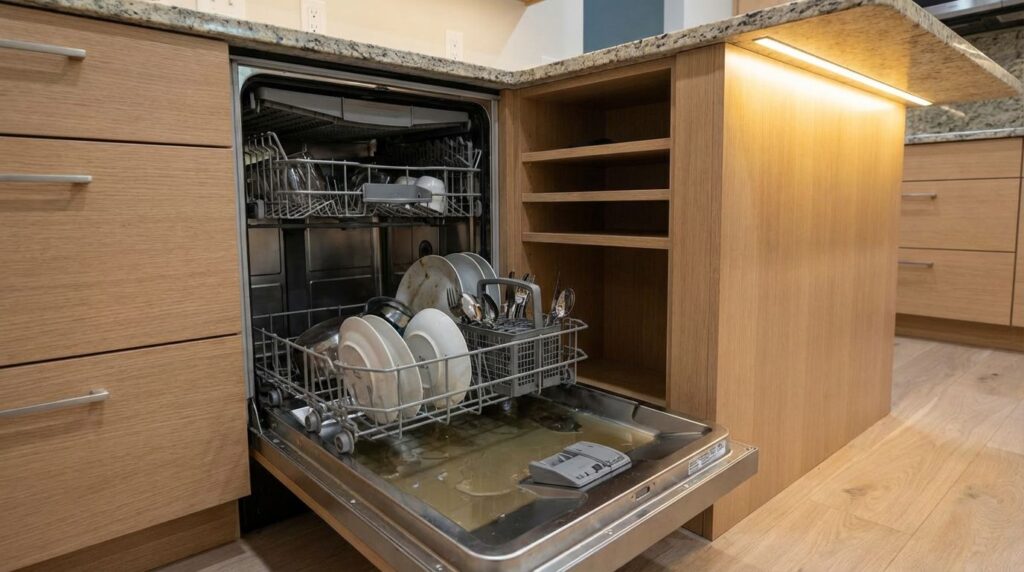
Opening your dishwasher after a cycle to find standing water at the bottom is one of those small household frustrations that quickly becomes a bigger problem if ignored. Not only is undrained water unsanitary, but it can lead to odours, damage to the dishwasher’s interior, and eventually a complete failure of the drain system. The good news is that most dishwasher draining issues have a clear cause and a straightforward fix.
Tri-City Repairs has helped homeowners in Coquitlam, Port Coquitlam, and Port Moody resolve dishwasher problems for years. This guide covers everything you need to know about why your dishwasher isn’t draining and what you can do about it.
How a Dishwasher Draining System Works
Before troubleshooting, it helps to understand the basic mechanics. At the end of each wash and rinse cycle, your dishwasher uses a drain pump to push water out through a drain hose that connects either to your garbage disposal (garburator) or directly to your sink drain. The system also includes a filter or screen that catches food debris to prevent it from clogging the drain. When any part of this chain fails or gets blocked, water stays in the tub.
Common Causes of a Dishwasher That Won’t Drain
1. Clogged Filter or Drain Basket
This is the most common cause and the easiest to fix. Most modern dishwashers have a filter at the base of the tub — usually a cylindrical mesh screen — that traps food particles during the wash. If this filter isn’t cleaned regularly, it becomes clogged and prevents water from draining properly.
What to do: Remove the bottom rack. Locate the filter — it’s typically in the centre or back of the tub floor and twists to unlock. Remove it, rinse it under warm running water, and use a soft brush to remove any stubborn debris. Reinstall and run a short cycle. If this is the issue, the problem should be resolved immediately.
How often to clean: For typical household use, cleaning the filter once a month is recommended. If you regularly wash heavily soiled dishes without rinsing first, clean it every two weeks.
2. Blocked Drain Hose
The drain hose connects the dishwasher to either the garbage disposal or the sink drain under your counter. Over time, grease, food residue, and detergent buildup can partially or fully block this hose. A kinked hose (often caused during installation or after moving the dishwasher) can also restrict water flow.
What to check: Pull the dishwasher out slightly (after disconnecting power) and inspect the hose at the back. Look for obvious kinks or tight bends. If it appears clear externally, the blockage may be internal — a plumber’s snake or a garden hose run through the drain hose can often clear it.
Important installation note: The drain hose should have a high loop — running up to the underside of the counter before going back down to the drain. Without this loop, water can siphon back into the dishwasher after draining. This is a very common installation error in homes across the Tri-Cities.
3. Garbage Disposal Knockout Plug Not Removed
If your dishwasher drains into a garbage disposal (garburator) and you recently had the disposal replaced, there’s a very common installation oversight: the knockout plug inside the disposal’s dishwasher inlet may not have been removed. This plug is meant to be punched out during installation when a dishwasher is connected, but it’s sometimes left in place by mistake, completely blocking drainage.
What to do: This is a quick fix. Disconnect the drain hose from the disposal, then look inside the inlet port on the disposal. If you see a plastic cap or disc blocking the hole, use a screwdriver and hammer to knock it out, then remove the plastic from inside the disposal chamber. Reconnect the hose and test.
4. Clogged or Jammed Drain Pump
The drain pump is a motorized component that actively pushes water out of the tub. If a piece of broken glass, a small stone, a cherry pit, or another hard object gets past the filter and reaches the pump, it can jam the impeller (the spinning blade inside the pump) and prevent it from turning.
Signs of a jammed pump: The dishwasher makes a loud humming sound during the drain phase but no water moves. You may also hear a grinding or rattling sound when the drain pump tries to activate.
What to do: Accessing the pump requires removing the filter and sometimes the spray arm assembly at the bottom of the tub. Once you have access to the pump housing, look for and remove any foreign objects. This repair is manageable for handy homeowners but can be frustrating without the right tools — call us if you’d rather not take it apart.
5. Faulty Drain Pump Motor
If the pump isn’t jammed but still won’t drain, the pump motor itself may have failed. Drain pump motors can burn out over time, especially if they’ve been working hard against a partial clog for an extended period. A failed motor typically produces either complete silence during the drain phase or a single loud hum followed by nothing.
Replacing a drain pump motor is a repair that requires some technical comfort — if you’re not sure, this one is worth calling in a professional for. Our technicians carry pump motors for most major brands in their service vehicles.
6. Check Valve Stuck Closed
Many dishwashers have a check valve — a small flap or ball inside the drain hose or pump housing — that prevents water from flowing back into the tub after draining. If this valve becomes stuck in the closed position (often due to debris or mineral buildup), it blocks water from exiting the tub entirely.
This is worth inspecting if you’ve ruled out the filter, hose, and pump as causes. The check valve is typically accessible near the pump housing.
Related Dishwasher Issues to Watch For
A dishwasher that’s struggling to drain may also be showing other symptoms. If your dishes aren’t coming out clean or you’re seeing residue on glasses, the water circulation system may also be affected. Dishwasher Leaves a Film on Glasses covers the reasons why residue builds up and how to address it.
Heating problems can also compound draining issues — water that doesn’t reach the right temperature may carry more grease and food residue that contributes to clogs over time. See 5 Reasons Your Dishwasher’s Water Isn’t Heating Up for more on that.
Step-by-Step Troubleshooting Checklist
- Remove and clean the filter thoroughly.
- Check the drain hose for kinks and ensure it has a proper high loop.
- Confirm the garbage disposal knockout plug is removed (if newly installed).
- Inspect the pump for foreign objects.
- Check the check valve for debris or mineral blockage.
- Test the pump motor — listen for humming without water movement.
Preventing Future Drainage Problems
- Scrape dishes before loading — not pre-rinsing is fine, but large food chunks should be removed.
- Clean the filter monthly — this single habit prevents the majority of draining issues.
- Run hot water in the sink before starting the dishwasher — this ensures the incoming water is already hot and reduces grease buildup in the drain hose.
- Run a cleaning cycle monthly — use a dishwasher cleaner tab or a cup of white vinegar placed in the bottom of an empty dishwasher.
- Don’t overload — overcrowding prevents water from circulating and reaching the drain properly.
When to Call Tri-City Repairs
If you’ve worked through the checklist and your dishwasher still won’t drain, it’s time to bring in a professional. Replacing a drain pump motor, diagnosing an electrical fault in the control board, or dealing with a complex installation issue are all cases where professional repair is the right call.
Not sure whether to repair or replace? DIY vs Professional Appliance Repair: When to Call the Experts offers a helpful framework for making that decision.
Tri-City Repairs serves the Tri-Cities area with fast, reliable appliance repair. Call us at (604) 359-5952 or book at tricityrepairs.ca — we’ll get your dishwasher running properly again.